
Carbonara Pasta (The Only Recipe You’ll Ever Need)

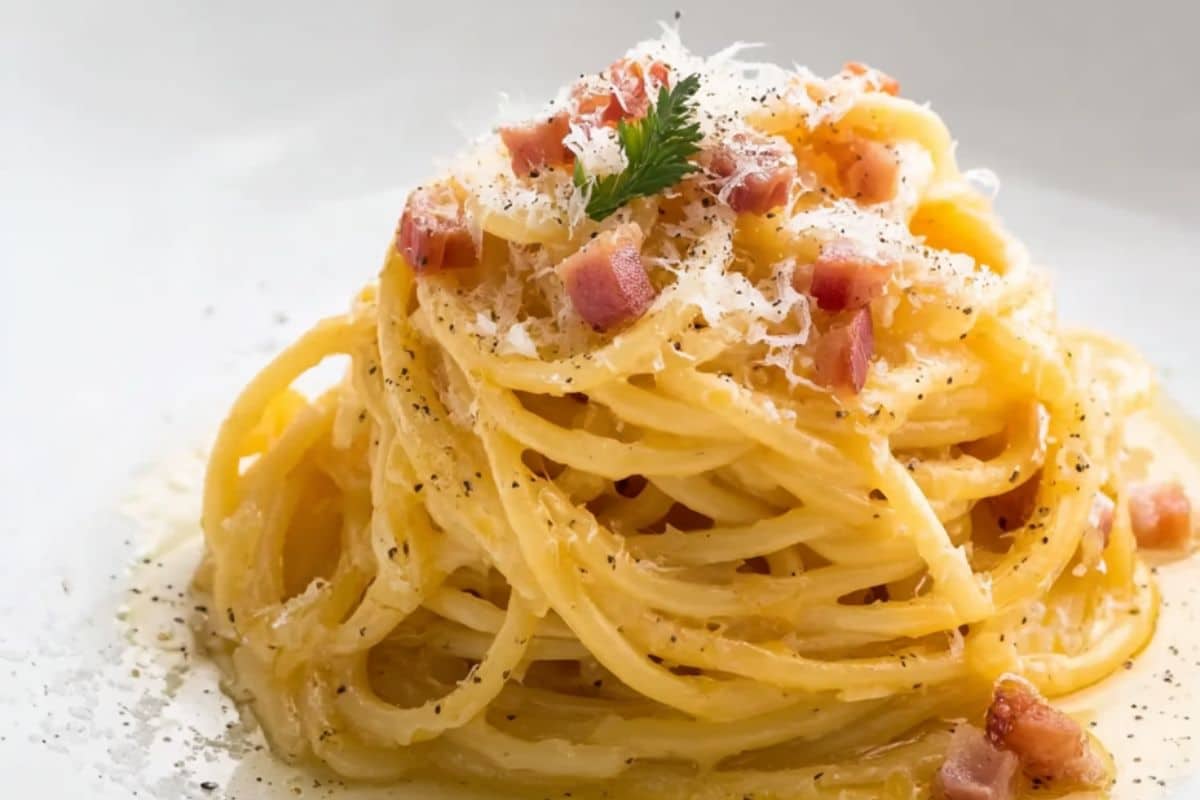
Carbonara is one of those recipes I make often, and for good reason. You need just five ingredients, one pan, and thirty minutes. The result is one of the most satisfying pasta dishes you’ll ever enjoy.
The sauce is rich and smooth, coating every strand of pasta without feeling heavy. Just eggs, cheese, cured pork, and a bit of pasta water do all the work.
It’s a meal that seems impressive but requires almost no effort. I love making it on weeknights when I want something homemade but quick. It’s also perfect for a low-key dinner party where you want to impress without too much hassle.
The only tricky part is the eggs. If you cook them incorrectly, you’ll end up with scrambled pasta. However, once you learn the technique, which is easy, you’ll never mess it up again. This recipe guides you through exactly how to make it.
Have some extra spaghetti pasta? Try this easy chicken spaghetti recipe.
Why You’ll Love This Recipe
- Ready in 30 minutes, start to finish. This is faster than most delivery orders. Boil the pasta, cook the pork, mix the sauce; done.
- Only 5 ingredients: eggs, cheese, pasta, pepper, and cured pork.
- No cream needed. The sauce is naturally silky. Eggs, cheese, and a splash of starchy pasta water do all the work.
One pan, one pot. Barely any washing up. - Budget-friendly and filling. A portion costs very little to make and keeps you full. It’s one of the best value meals you can cook from scratch.
- Easy to customize with simple swaps. Can’t find guanciale? Use pancetta or bacon. Prefer Parmesan over Pecorino? Go for it. The recipe handles substitutions well.
- Once you learn it, it becomes a weekly staple. The technique takes one try to master. After that, it’s one of the easiest, most reliable meals in your rotation.

Ingredient Notes
Here’s what to know about each ingredient before you start, including the best substitutes when you can’t find the original.
- Spaghetti is the classic choice and coats beautifully with the silky sauce. Use dried pasta, not fresh. Dried holds its shape and releases more starch into the water, which is exactly what you need. Linguine, bucatini, fettuccine also work as a great substitute.
- Guanciale is the traditional choice for this recipe. Guanciale comes from the pork cheek and has more fat than pancetta. That fat melts down into a glossy, flavorful base that coats the pasta before the egg sauce even goes in. Best swap: pancetta (very similiar in flavour). Bacon works too just know it adds a smokiness the original doesn’t have.
- Whole eggs. The eggs are the sauce. Whole eggs provide structure and silkiness; extra yolks add richness and that deep golden color. Use room temperature eggs, not cold straight from the fridge. Cold eggs are more likely to cook unevenly and scramble when they hit the pasta.
- Pecorino Romano is the traditional cheese for carbonara. It’s sharp, salty, and has a slightly tangy edge that balances the richness of the eggs and pork. Always grate it yourself; pre-grated cheese has anti-caking agents that prevent it from melting smoothly into the sauce. Grate it as finely as possible. Coarse shreds don’t mix in as well and can make the sauce grainy.
- Black pepper isn’t just a finishing touch. It’s a key part of the dish. The name “carbonara” likely comes from the Italian word for coal, which refers to the heavy flecks of black pepper on the pasta. Use freshly cracked, not pre-ground. Better yet, toast the cracked pepper in a dry pan for 30 to 60 seconds before adding the pork. This deepens the flavor and brings out a gentle heat.
How to Make Carbonara Pasta
The process is straightforward. There’s one technique that matters more than anything else, and once you have it, the whole dish comes together in under 30 minutes.

- Bring a large pot of water to a boil.
Salt it generously; it should taste like mild seawater. This is the only time you can season the pasta from the inside. Don’t skip it, and don’t be shy with the salt.

- Render the pork.
Add your pancetta to a cold, dry pan. Turn the heat to medium . Cook slowly on medium-low until the fat has fully melted and the meat is crispy at the edges. Don’t rush this; a good 8 to 10 minutes gives you the best flavor.

- Mix your egg and cheese sauce.
While the pasta cooks, whisk together your eggs and finely grated Pecorino Romano cheese in a bowl until smooth. Season with a small pinch of black pepper. Set it aside; you’ll need it ready to go the moment the pasta is done.

- Reserve your pasta water before you drain.
This step catches people out every single time. Before you drain the pasta, scoop out a large mugful of the cooking water and set it aside. The starch in that water emulsifies the sauce and makes it glossy. Once you’ve drained the pasta, it’s gone.
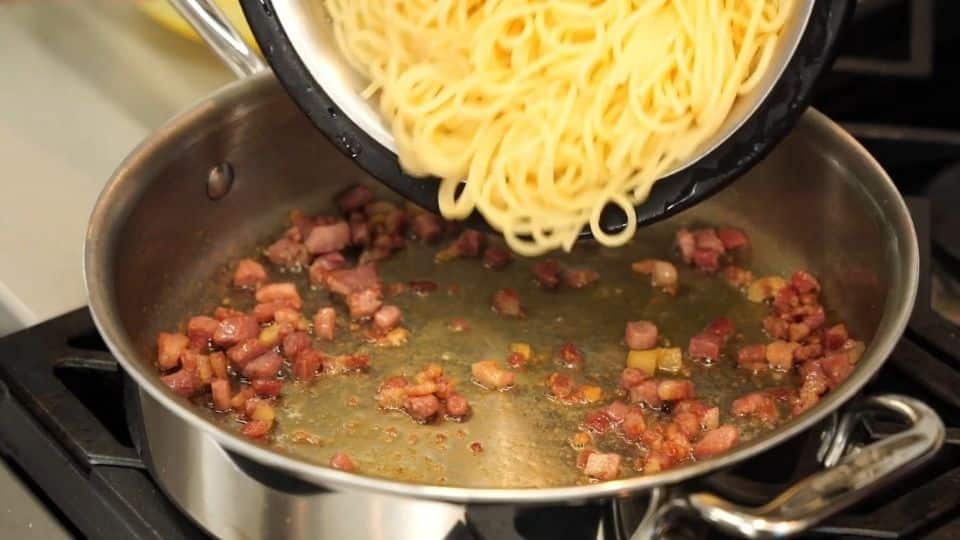
- Toss the pasta with the pork fat.
Add the drained pasta straight into the pan with the pork and its rendered fat. Toss well to coat every strand. This builds a base layer of flavor before the egg sauce goes in.

- Take it off the heat, then add the egg mixture.
Remove the pan from the heat entirely. Wait about 20 to 30 seconds to let it cool slightly. Then pour in the egg and cheese mixture and toss quickly and constantly.

- Add pasta water
Add pasta water a small splash at a time, tossing as you go, until the sauce is smooth, glossy, and coats the pasta evenly. You’re aiming for creamy not soupy, not thick.

- Toss the pasta
Toss the pasta to ensure every strand is coated with the sauce and all ingredients are well incorporated.
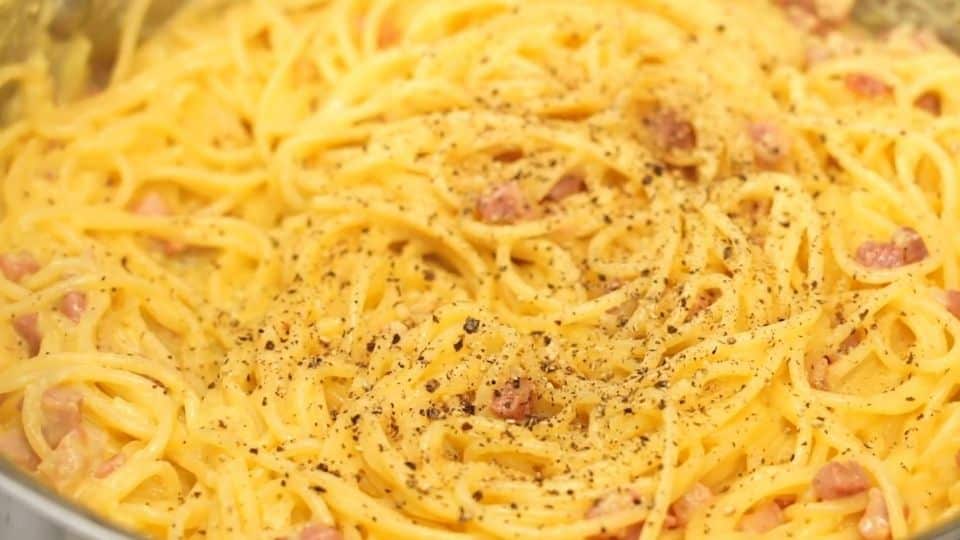
- Garnish with fresh cracked black pepper
Finish with a little extra grated cheese and another crack of black pepper

- Plate and serve immediately.
Divide between warm bowls. . Carbonara does not wait; serve it straight away while the sauce is at its silkiest.
The one technique that matters most
- The pan must be off the heat before the egg mixture goes in. This step separates silky carbonara from a plate of scrambled pasta.
- The eggs don’t need direct heat; they cook gently from the residual warmth of the pasta and the pan. Toss quickly, add pasta water to control the temperature, and you’ll get a perfect sauce every time.

Recipe Success Tips
These are the details that separate a good carbonara from a great one. Most take no extra time; they just require knowing what to do and when.
- Take your eggs out of the fridge early.
Room temperature eggs blend more smoothly and are much less likely to scramble when they hit the warm pasta. Take them out at least 30 minutes before you start cooking. This small habit makes a real difference.
- Salt your pasta water more than feels right.
This is the only time you season the pasta itself. Under-salted water leads to flat-tasting pasta, and no amount of cheese or pork can fix that. Taste the water, it should taste like sea water.
- Render the pork low and slow.
High heat toughens the meat and burns the fat before it renders properly. Medium-low is what you want. Give it 8 to 10 minutes until the fat is completely melted and the edges are just starting to crisp. That rendered fat is your flavor base; treat it well.
- Set a reminder to save the pasta water.
Seriously, put a mug next to the pot before you start boiling. It’s easy to forget when you’re moving fast. You need at least half a cup, ideally a full cup. Once the pasta is drained, that water is gone, and there’s no substitute for what it does to the sauce.
- Always take the pan off the heat before adding eggs.
This is the most important step in the whole recipe. Direct heat turns eggs into scrambled eggs. Residual heat turns them into sauce. Remove the pan from the burner, count to 20, then pour in the egg mixture and toss immediately. If the sauce looks like it’s seizing, add a splash of pasta water and keep tossing.
- Add pasta water gradually a little at a time.
Pasta water loosens and emulsifies the sauce, but too much makes it watery. Add it a tablespoon or two at a time while tossing constantly. Stop when the sauce coats the pasta in a smooth, glossy layer and moves freely. You might use two tablespoons, you might use six; it depends on the pasta and the heat in your pan.
- Warm your bowls before serving.
Carbonara cools and thickens quickly. A cold bowl pulls the heat out of the pasta in seconds, and the sauce starts to set. Run your serving bowls under hot water for a minute, or put them in a low oven while you cook. This small touch keeps everything silky from the first bite to the last.
Variations and Ingredient Swaps
The classic recipe is hard to beat. But there are plenty of simple ways to make it your own or use what you have in the kitchen right now.
- Pancetta instead of guanciale
Pancetta is the most natural substitute and the one I use most often. It comes from the pork belly rather than the cheek, so it has slightly less fat, but the flavor is very close. Dice it small and cook it the same way.
- Bacon instead of guanciale
Bacon works well and is the easiest option to find. Use good-quality, unsmoked streaky bacon if you can; smoked bacon noticeably changes the flavor. It renders down nicely and still gives you that crispy, savory base the dish needs.
- Parmesan instead of Pecorino
Parmesan is milder, nuttier, and less salty than Pecorino. It melts just as smoothly and creates a slightly creamier sauce. Many home cooks, myself included, use a 50/50 blend of both, which combines the sharpness of Pecorino with the mellow depth of Parmesan.
- Rigatoni instead of spaghetti
Rigatoni is my go-to pasta for carbonara. The tubes scoop up the sauce and hold it inside, so every bite has more flavor. It also keeps its shape better if you’re serving to a group and can’t plate immediately. Bucatini and linguine are good alternatives too.
- Add a splash of white wine
Once the guanciale is crispy, pour in a small splash of dry white wine and let it bubble up and reduce for a minute before adding the pasta. It cuts the richness with a little acidity and adds subtle depth to the base. Not traditional, but very good.
- Add garlic
Traditionalists will disagree, but a clove of garlic sautéed briefly in the rendered pork fat before the pasta arrives is a genuinely good addition. Use it whole and remove it before serving for a gentle background warmth, or crush it in for something more pronounced.
- Add chili flakes
A pinch of dried chili flakes added to the pan with the pork gives the finished dish a gentle, lingering heat that works brilliantly against the richness of the sauce. Start small; you can always add more at the table, but you can’t take it back.
- Vegetarian carbonara
Skip the pork and use fried capers or sun-dried tomatoes instead; both provide saltiness and a chewy, savory element that partially replaces what the guanciale contributes. Fry them in a little good olive oil to build your base fat for the sauce. It’s a different dish, but a satisfying one.
- Gluten-free carbonara
The sauce contains no gluten at all; just swap in your favorite gluten-free pasta. Rice-based or corn-based varieties work best as they hold their shape and release enough starch into the water. Check the package cooking time carefully, as gluten-free pasta can go from al dente to soft very quickly.

What to serve based on the occasion
- Weeknight. Keep it simple. Make carbonara, a lemon salad, and some crusty bread. You can have it on the table in 30 minutes with no fuss.
- Date night. Start with bruschetta, a nice bottle of Pinot Grigio, and serve asparagus on the side. It feels thoughtful without needing much extra work.
- Guests. Begin with marinated olives while you cook. For the main course, serve carbonara with roasted broccolini and garlic bread on the side. This option is low stress and truly impressive.

Storing leftovers in the fridge
Transfer leftovers to an airtight container and refrigerate them within two hours of cooking. The sauce will firm up as it cools, which is normal. It can be stored for up to two days, although the texture won’t be as smooth as when it was fresh. Don’t leave carbonara out for more than two hours. The egg-based sauce can become unsafe to eat at room temperature.
How to reheat it without ruining it
The key is to use low heat and add a splash of water.
- Put the leftover pasta in a pan on the lowest heat setting, add a tablespoon or two of water, and stir gently and constantly until it warms through. The sauce will loosen back up as it heats and absorbs moisture.
- Use a pan on low heat, not a microwave on full power. Add water a little at a time and keep stirring. Stop as soon as it’s warmed through; don’t let it sit on the heat.
- If you must use a microwave, heat in 20-second bursts on medium power, stirring in between. High power will scramble the eggs.
Can you freeze carbonara?
No. The egg-based sauce separates when frozen and thawed. The proteins in the eggs break down, resulting in a grainy, watery mess that stirring won’t fix. This is one dish that you can’t freeze once it’s cooked.
If you have too much, it’s better to eat the leftovers within two days from the fridge rather than trying to freeze them.
Frequently Asked Questions
The most common questions readers have about making carbonara are answered honestly and clearly.
- Why did my carbonara turn into scrambled eggs?
The pan was too hot when you added the egg mixture. Direct heat scrambles eggs, period. The solution is simple: remove the pan from the heat completely, wait 20 to 30 seconds, then add the egg and cheese mixture while tossing quickly. If the sauce still looks like it’s seizing up, add a splash of pasta water immediately and keep tossing. The cool water lowers the temperature and helps the sauce come together. Also, check that your eggs were at room temperature before you started. Cold eggs scramble faster and are harder to control. - Do you put cream in carbonara? No, and you don’t need to. Authentic carbonara has never contained cream. The sauce gets its silky, rich texture entirely from eggs, cheese, and a splash of starchy pasta water working together. Once you get the egg technique right, you won’t miss it at all. The result is genuinely better without it.
- What’s the difference between guanciale and pancetta? Guanciale is cured pork cheek, while pancetta is cured pork belly. Guanciale has more fat, a softer texture when cooked, and a slightly sweeter, more delicate flavor. It’s the traditional choice for carbonara and worth using if you can find it. Pancetta is the next best option and is widely available. The flavor is very similar, and it renders down the same way. Most home cooks won’t notice a significant difference in the finished dish. Bacon works too in a pinch; just choose unsmoked if you can, as smoked bacon noticeably changes the flavor.
- Is it safe to eat carbonara if the eggs aren’t fully cooked? The eggs in carbonara aren’t raw; they’re gently cooked by the residual heat of the pasta. They reach a temperature that pasteurizes them without scrambling, which is the whole point of the off-the-heat technique. If you’re cooking for pregnant women, young children, elderly guests, or anyone with a weakened immune system, use pasteurized eggs instead. They behave the same in the recipe.
- My sauce is too thick and gluey. This happens when the pasta cools too much before the sauce goes in or when not enough pasta water is added. The sauce needs warmth and moisture to stay fluid; without both, it tightens up quickly. The solution is to add pasta water a splash at a time while tossing the pasta constantly. Work quickly and keep the pan moving. If it has already thickened too much, a little warm water stirred gently will loosen it back up. Have your pasta water ready next to the pan before you start.
- Can I make carbonara for a crowd? Yes, but scale carefully. The trickier part is the tossing: a very large batch of pasta is harder to manage off the heat, which increases the risk of scrambling. For six or more people, consider cooking in two batches and combining them in a large warmed bowl at the end. Use rigatoni instead of spaghetti; it’s more forgiving with larger amounts and holds the sauce better as it sits.
Carbonara Pasta (The Only Recipe You'll Ever Need)
Ingredients
Check Out More Pasta Recipe Ideas!
- Chicken Spaghetti Recipe. I keep coming back to this chicken spaghetti as It’s creamy, cheesy, and full of flavor. I love that the entire meal is ready in 30 minutes, perfect for busy weeknights.
- How To Make Chicken Alfredo. Silky ribbons of fettuccine are coated in a rich, buttery cream sauce and topped with golden, juicy slices of seasoned chicken.
- How To Make Chicken Parmesan. Crispy, golden, shatteringly crunchy breading that stays crispy even under the sauce and cheese. Tender, juicy chicken that’s perfectly cooked all the way through.
- Macaroni Salad Recipe. This macaroni salad is creamy without being heavy and tangy, with just a hint of sweetness. Best of all, it takes just 20 minutes to prepare.
- Tuna Noodle Casserole. This Tuna noodle casserole is creamy, cheesy, and comforting. The noodles are tender, the sauce is rich but not heavy, and the golden, crispy breadcrumb topping makes each bite worth it