
Fresh, Light, and Easy Vietnamese Spring Rolls
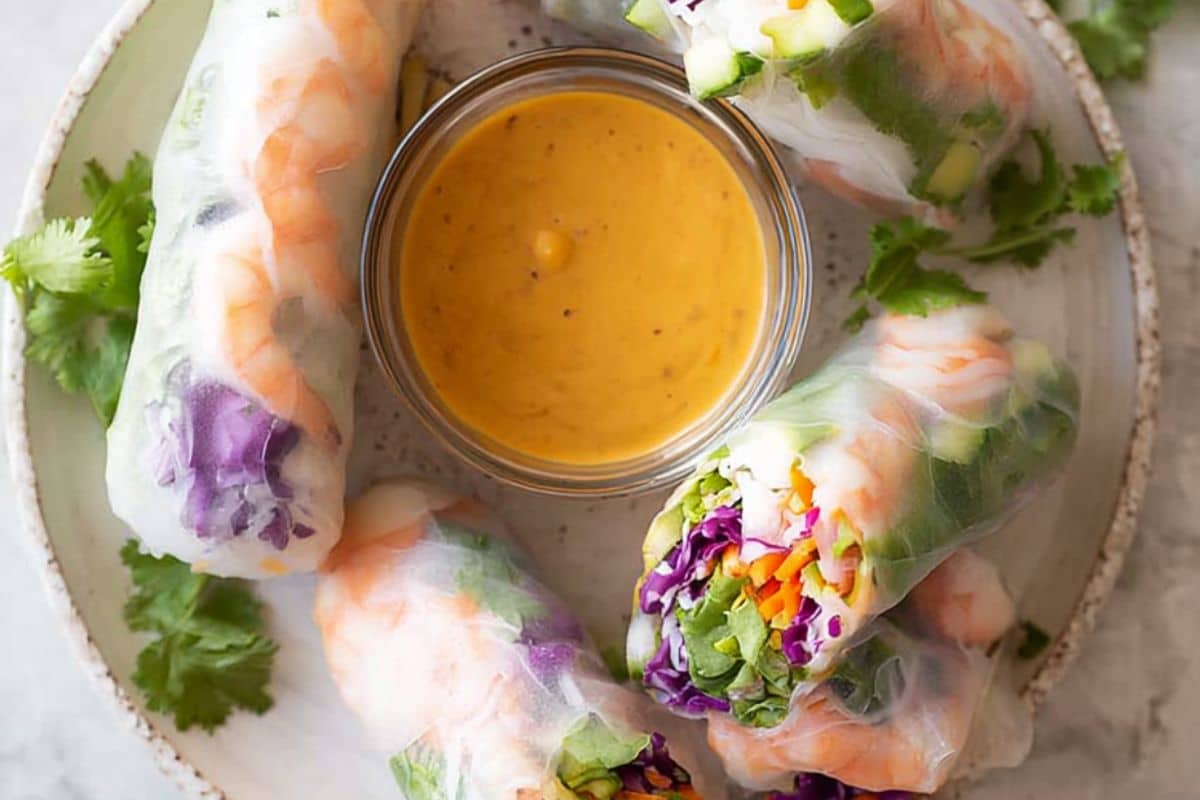
These Vietnamese spring rolls are light, cool, and full of flavor. The mix of fresh mint, crisp vegetables, silky rice noodles, and creamy peanut dipping sauce is something you’ll crave again and again. I make them often during summer, but they’re really good all year long.
The best part is how easy they are to prepare. There’s no hot oil, no oven, and hardly any cooking involved. If you can boil water for the noodles and peel shrimp, you can make these.
They make a great light weeknight dinner, a fun build-your-own party spread, or simple meal prep for lunches during the week. Kids enjoy rolling their own. Guests always ask for the recipe.
Rolling them takes just one try to master. After that, it’s completely effortless. I’ll guide you through each step so your first batch turns out clean, tight, and ready for the table.
Can’t get enough spring rolls? Check out these fried Vietnamese spring rolls recipe
Why You’ll Love This Recipe
- No cooking required. Besides boiling noodles and cooking proteins, there’s no heat involved. This recipe is perfect for hot days when you want to avoid the stove.
- Ready in 30 minutes. Once you prep and lay out your ingredients, the rolling goes quickly. This is truly quick weeknight food.
- Naturally gluten-free. Rice paper wrappers and rice vermicelli have no wheat.
- Easy to make vegan or vegetarian. Replace the shrimp with tofu and use a plant-based dipping sauce. The recipe works either way.
- Great for meal prep. Store the components separately and roll fresh each day. Everything lasts in the fridge for up to three days.
- Perfect for sharing. Set out all the fillings and let everyone roll their own. It turns dinner into something interactive and fun, requiring no extra effort from you.
- Cheaper than takeout. A full batch feeds four people using everyday supermarket ingredients.
Ingredient Notes
A few simple ingredients come together to create something surprisingly delicious. Here’s what you need to know before you shop.
- Rice Paper Wrappers (Bánh Tráng)
These are the star of the recipe. Look for round wrappers that are 22cm in diameter; that’s the ideal size for rolling without tearing. You can find them in the Asian food aisle of most supermarkets or at any Asian grocery store. They can last for months in your pantry, so buy a larger pack than you think you need. The extras are for practice. - Rice Vermicelli Noodles
These are thin, delicate, and quick to cook. Boil them for 3 to 4 minutes, then rinse immediately under cold water to prevent them from sticking together. Don’t skip the rinse; it makes a significant difference. Drain them well before adding them to your rolls. - Protein
Shrimp (prawns) are the classic choice. Cook them until they’re just pink, then slice them in half lengthwise; they look beautiful through the wrapper. Poached and shredded chicken works just as well. For a vegetarian option, use extra-firm tofu, pan-fried until golden. All three options taste great, so pick what you like. - Fresh Herbs
This is where Vietnamese spring rolls get their distinctive flavor. Use a mix of fresh mint, cilantro (coriander), and Thai basil if you can find it. The combination matters more than any single herb. If Thai basil isn’t available, regular basil works fine. Don’t skip the mint; it’s essential. - Vegetables
Crisp, crunchy vegetables balance the softness of the noodles and wrapper. Cucumber and carrots are the foundation. Julienne them thinly so they roll neatly without bulging. Butter lettuce leaves, bean sprouts, and thinly sliced avocado all make great additions. Use what’s fresh and in season. - Dipping Sauces
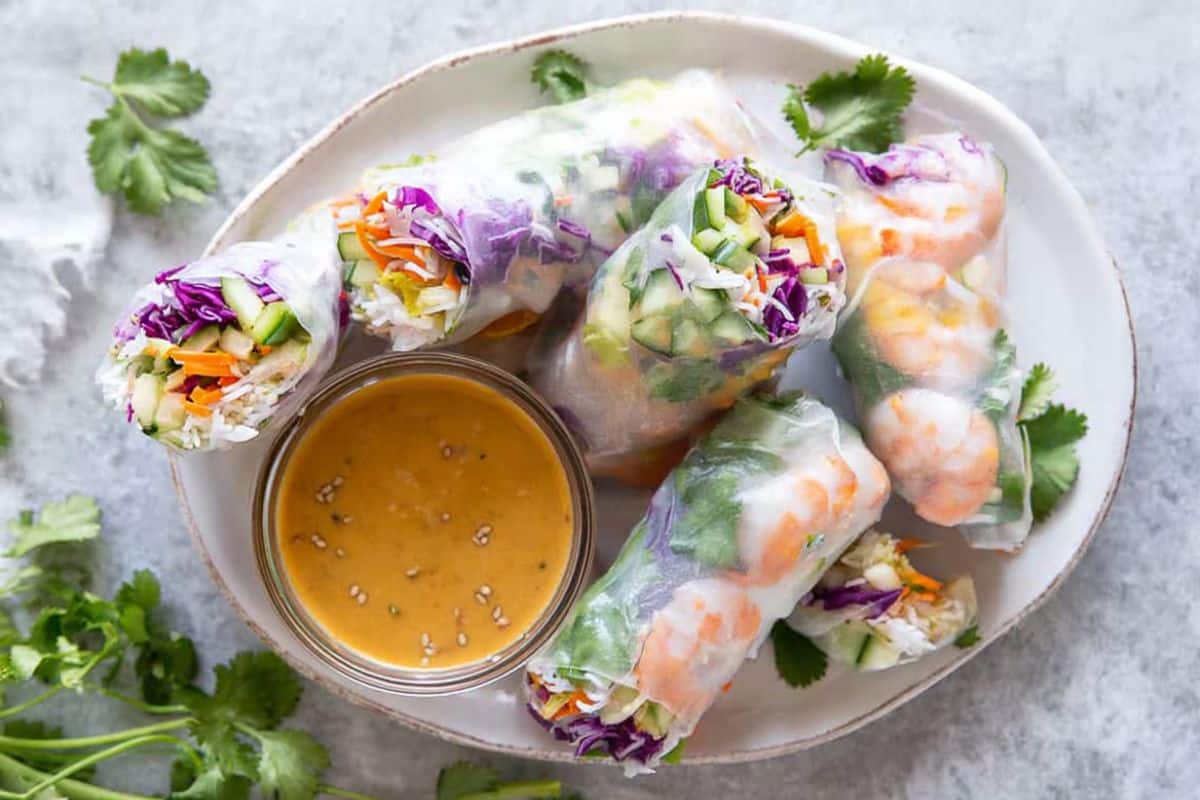
You need at least one. Peanut sauce is the crowd favorite; it’s rich, creamy, and slightly sweet. Nước chấm is the traditional option; it’s lighter, sharper, and made with fish sauce. I always make both when cooking for a group. Full recipes for both are in the instructions section below.
How to Make Vietnamese Spring Rolls
The process is easier than it seems. Prepare everything first, set up your rolling area, and the rest will go quickly. Here’s a complete guide before you begin.
Step 1: Prep Your Fillings
Get everything ready before you touch the rice paper. This is the most important rule in this recipe.
Step 2: Cook your shrimp
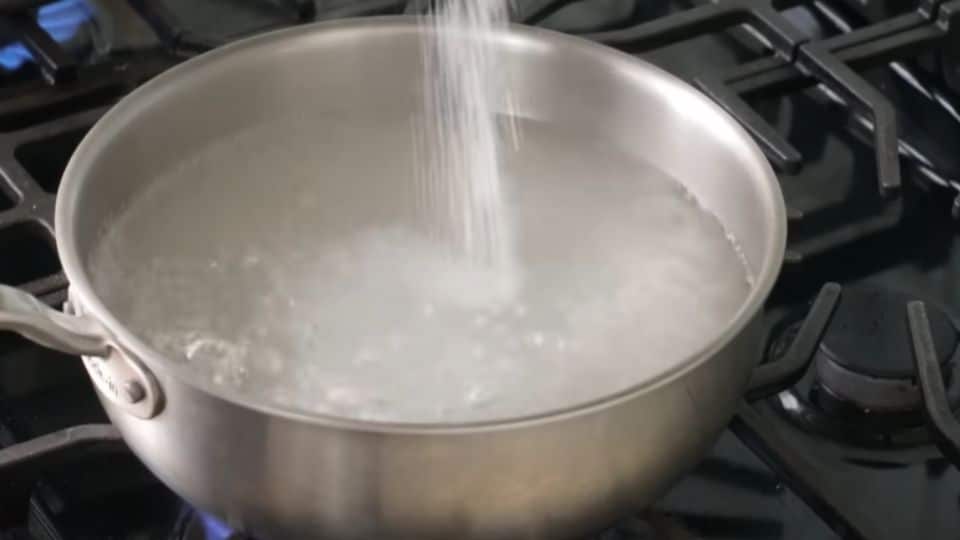
Bring a pot of water to a boil and add lots of salt. It should be as salty as the sea. Once its boiling, turn off the heat.
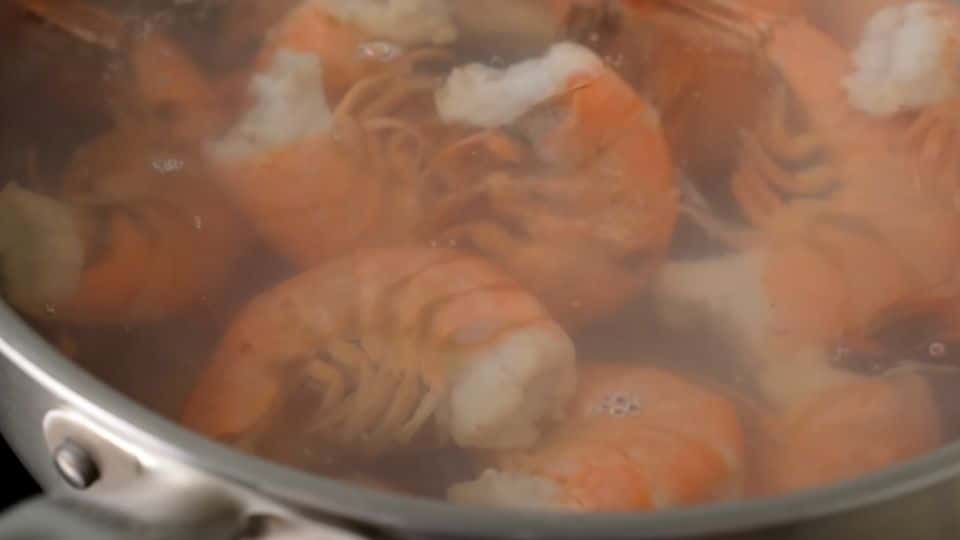
Add shrimp to the salty water remove the pot from heat and poach the shrimp for 4 minutes ( with the heat off ). Once timer is up, transfer the shrimp to a paper towel lined plate to drain then move to the fridge to cool.
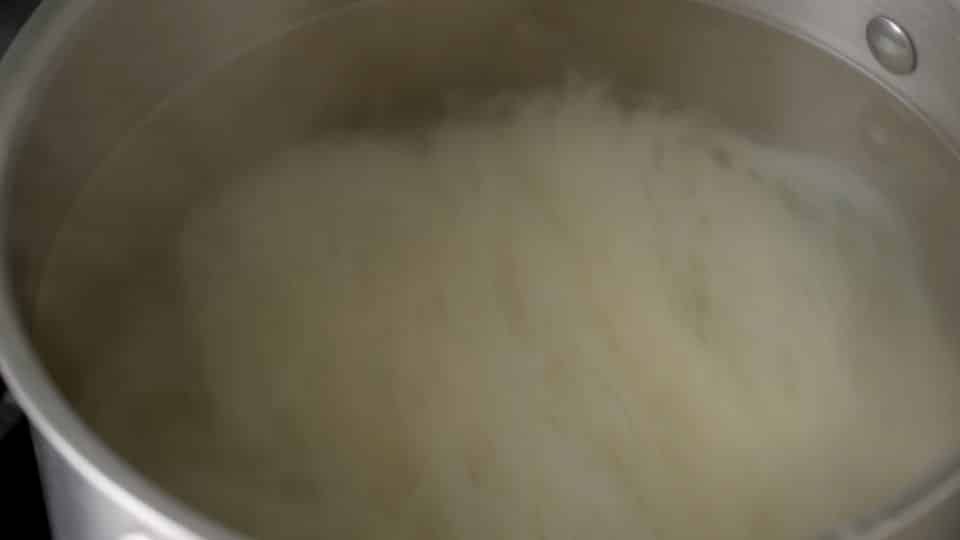
Step 3: Boil your vermicelli noodles
Bring a second pot of water to a boil. Turn off the heat, add your vermicelli noodles to soak for 3 to 4 minutes. Once time is up, rinse the noodles under cold water, drain well.
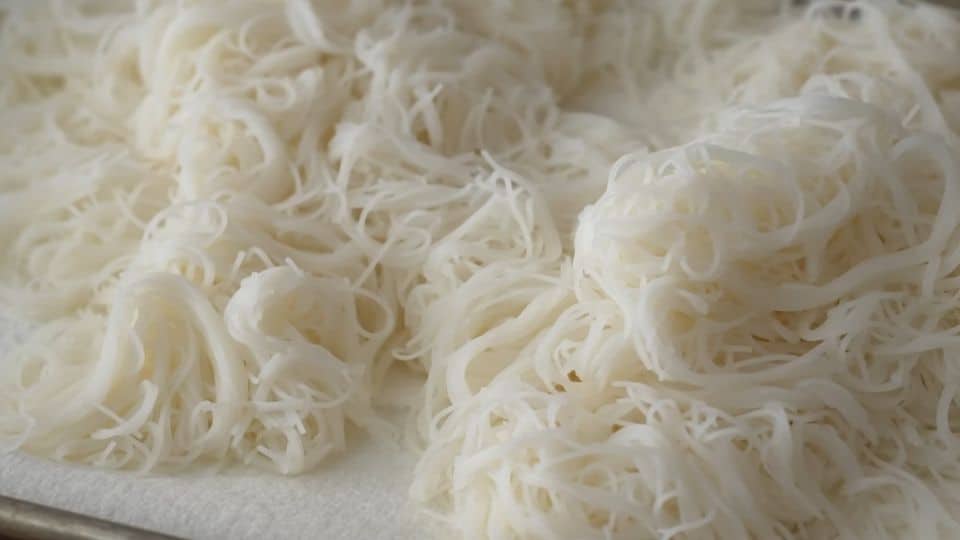
With a kitchen scissor, roughly cut your vermicelli a few times to prevent clumping then transfer to paper towel to dry a bit. Set aside.
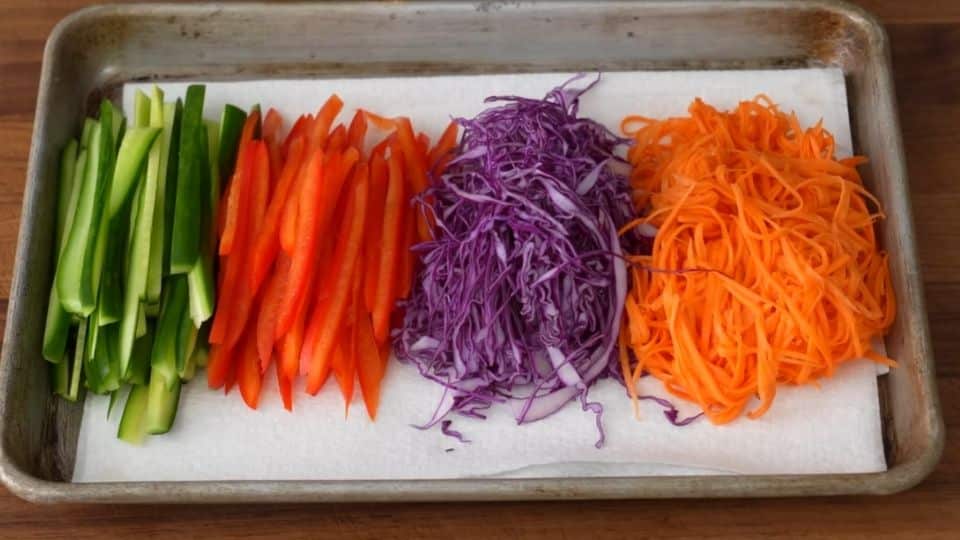
Step 4: Prep all your ingredients.
Shrimps have now cooled, halve them lengthwise. Julienne your carrots and cucumber into thin matchsticks.. Wash and dry your herbs. Pat them completely dry; excess moisture makes the wrappers soggy. Separate your lettuce leaves.
Everything should be laid out and ready to grab before you wet your first wrapper. Once the rice paper hits the water, the timer starts.
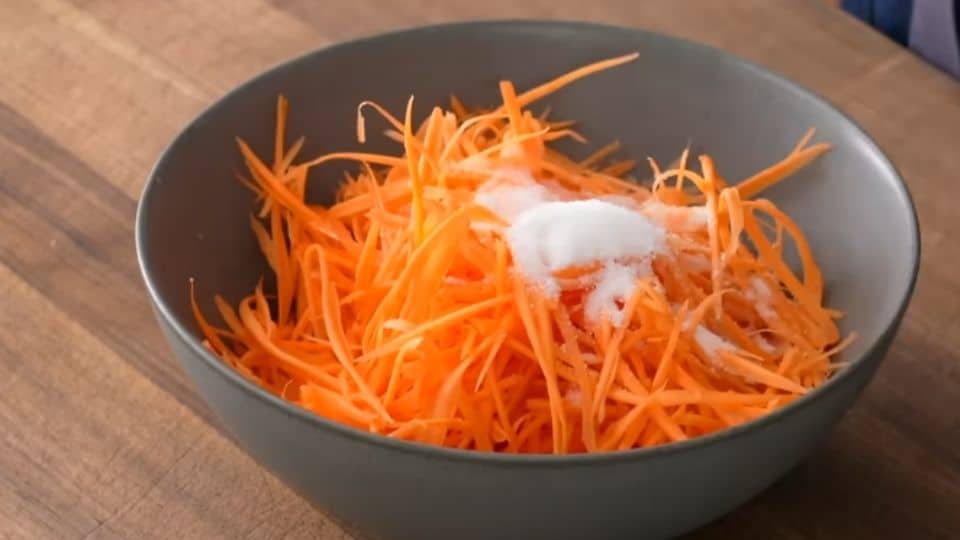
Step 5: Quickly pickle your carrots
To a bowl add your 10g salt, 20g sugar, and 20g rice vinegar. Add in your shredded carrots and toss to ensure all ingredients are well combined. Leave to marinate for 5-10min.
Step 6: Set Up Your Rolling Station
You need three things: a wide shallow bowl of room temp water, a damp clean tea towel or cutting board, and all your fillings within arm’s reach.
Arrange everything in the order you will use it. I place my protein closest to me, herbs in the middle, and noodles and vegetables at the back. Find a system that works for you and stick to it.
The water temperature is important. It should be room temperature – not hot or cold. Hot water can make the wrappers tear, and cold water won’t soften them properly.
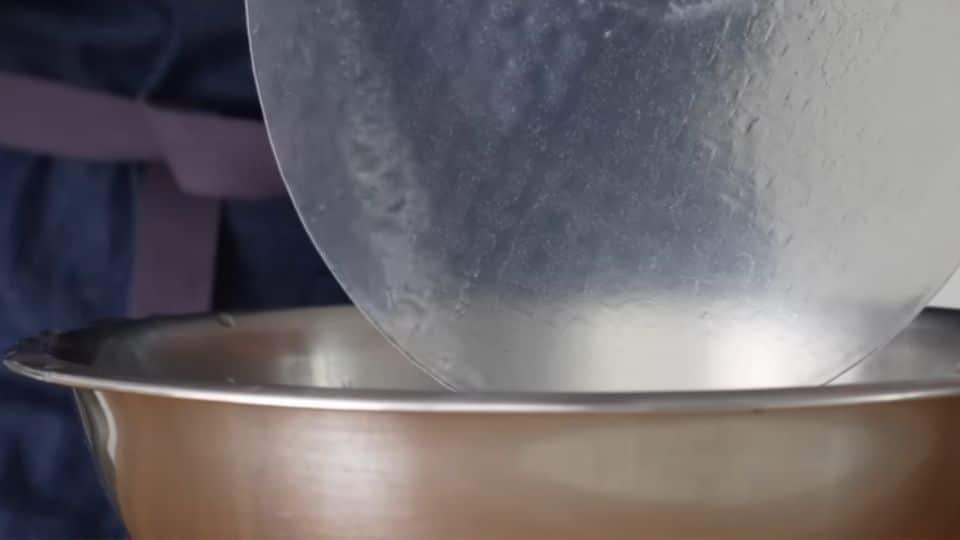
Step 7: Soak the Rice Paper
Submerge one wrapper flat in the water. Hold it there for 8 to 10 seconds, rotating it gently so every part gets wet. Lift it out when it feels soft and pliable but still has a little resistance not completely floppy.
Lay it flat on your board. It will continue to soften as you add your fillings, so pulling it out slightly early is okay.
Common mistake: soaking too long. A wrapper that is fully soft in the water will be impossible to roll without tearing. Slightly underdone is always better.
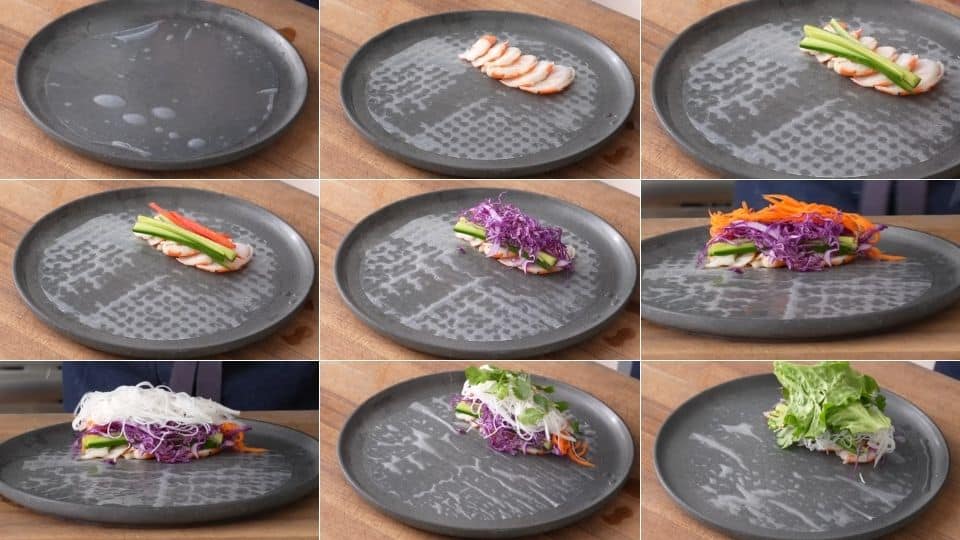
Step 8: Layer Your Fillings
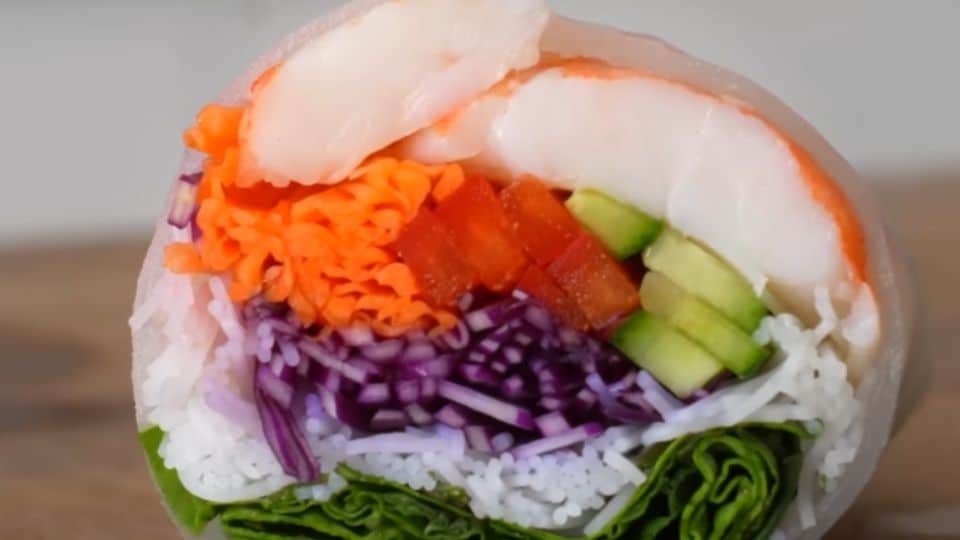
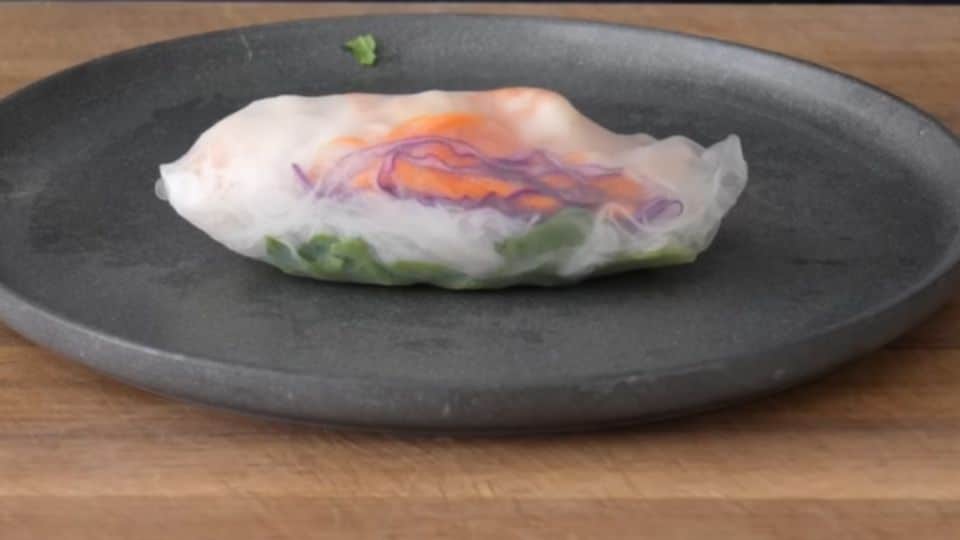
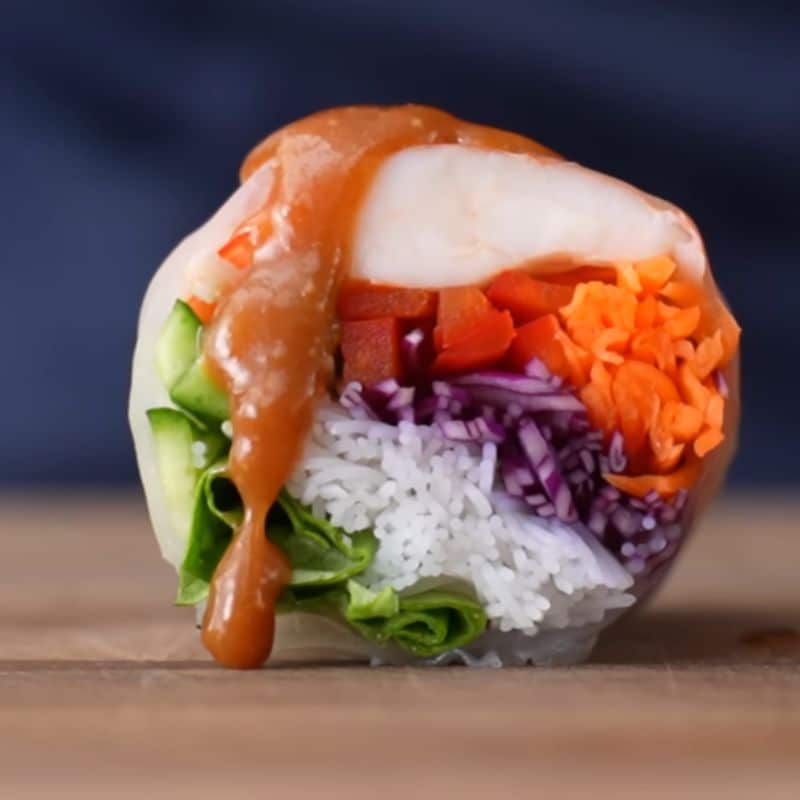
Place your fillings in the lower third of the wrapper, leaving about 3 cm clear on each side. Don’t pile everything in the center; spread it in a horizontal line so the roll stays even.
Layer in this order for the best results:
- Shrimp face down so it shows through the wrapper nicely
- Vegetables – carrots, cucumber, and bell pepper.
- A pinch of cabbage
- Vermicelli noodles – a small bundle, not a fistful
- Fresh herbs – mint, cilantro, Thai basil
- A piece or two of Lettuce leaf – this acts as a moisture barrier and keeps the wrapper intact
The golden rule: use less filling than you think you need. Overfilling is the main reason rolls fall apart. A tight, lean roll is better than a bulging one every time.
Step 9: Roll It Up
This part takes just one try to get right. Here’s the exact technique:
– Fold the bottom of the wrapper up and over the filling, tucking it firmly underneath.
– Fold both sides in toward the center like the first fold of a burrito.
– Roll away from you, maintaining firm and even pressure throughout.
– Stop when you reach the end of the wrapper. It will seal itself – no water or egg wash needed.
The roll should feel firm in your hands. If it feels loose, you used too much filling or the wrapper was too wet. Both issues are easy to fix on the next one.
Step 9: The Dipping Sauces
Make both if you can. They take less than five minutes each.
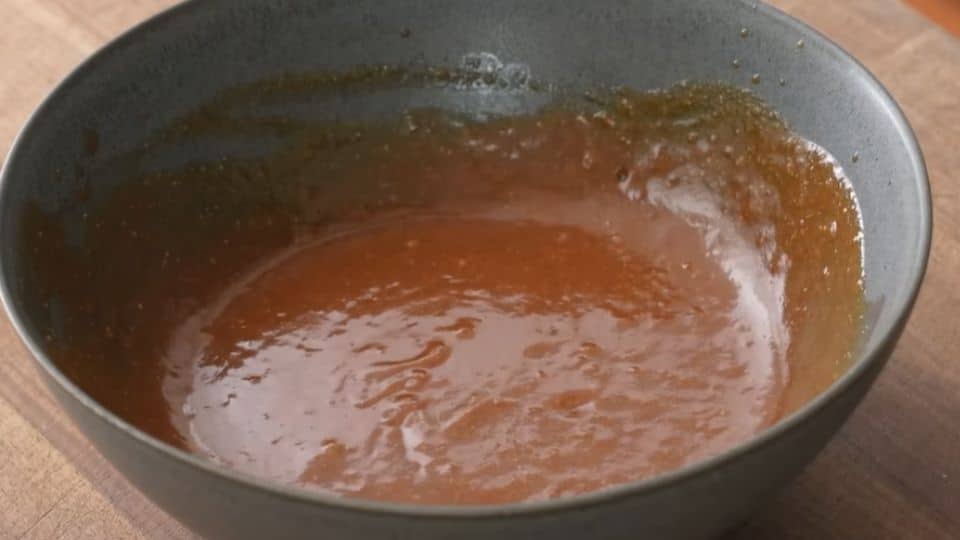
Peanut Dipping Sauce
– 3 tbsp hoisin sauce
– 2 tbsp creamy peanut butter
– Juice of half a lime
– 1 to 2 tbsp warm water to thin
– 1 tsp chili flakes (optional)
Whisk everything together until smooth. Taste and adjust add more lime for brightness or more hoisin for sweetness. Top with crushed peanuts before serving.
Nước Chấm (Vietnamese Dipping Sauce)
– 3 tbsp fish sauce
– 2 tbsp fresh lime juice
– 1 tbsp sugar
– 4 tbsp warm water
– 1 garlic clove, minced
– 1 red chili, finely sliced (optional)
Stir until the sugar dissolves completely. Taste as you mix it should balance salty, sour, and slightly sweet. Add more water if it’s too intense.
Recipe Success Tips
These are the mistakes I see most often and the fixes that can turn a frustrating first attempt into a roll you can be proud of.
- Warm water only, never hot.
Hot water is the main cause of torn wrappers. It softens the rice paper too quickly, leaving you with a sticky, unmanageable mess. Warm water gives you better control. If your wrappers keep tearing, cool your water down first before doing anything else. - Prep everything before you wet a single wrapper.
Wet rice paper waits for no one. The moment it hits the water, the clock starts. If you are still slicing cucumbers while your wrapper sits on the board, it will over-soften and stick to everything. A full prep station is a must. - Use less filling than feels right.
It seems generous and looks abundant. Then the roll splits open and falls apart on the plate. A small, tight bundle of filling works much better than a large one. When in doubt, take some out. - Pat your ingredients dry before rolling.
Wet herbs and dripping shrimp add moisture directly to the wrapper. This makes rolls soggy within minutes. A quick pat with a paper towel on your protein and herbs keeps everything fresh and intact for longer. - Pull the wrapper out of the water slightly early.
The rice paper continues to soften after you lay it on the board. If it feels perfectly soft in the water, it will be too soft once you finish layering your fillings. Slightly firm when it comes out means it will be perfectly pliable when you roll. Trust the process. - Roll with firm, even pressure throughout.
A loose roll is the second most common problem after overfilling. Apply steady pressure as you roll not so hard that you tear the wrapper, but firm enough that the roll feels solid in your hands. Think snug, not tight. - Serve within two hours of rolling.
Rice paper dries out and rolls stick together as they sit. If you’re making these ahead for a party, wrap each roll individually in a damp paper towel and cover the plate with plastic wrap. They’ll stay good for up to two hours at room temperature. After that, the texture starts to decline.
Variations and Ingredient Swaps
The best thing about this recipe is how easily it can be changed. The base technique stays the same; everything else is flexible.
- Vegan and Vegetarian Version
Replace the shrimp with extra-firm tofu. It adds a satisfying chew and absorbs flavor nicely from a quick marinade of soy sauce and sesame oil. For the dipping sauce, substitute fish sauce in the nước chấm with soy sauce or tamari. The peanut sauce is already vegan; no changes are needed there. - Low-Carb Version
Skip the vermicelli noodles completely and double up on vegetables instead. Add sliced avocado for creaminess and substance; it fills the roll out nicely and adds healthy fat that keeps you satisfied. The texture is different but genuinely delicious. This version is also lighter and quicker to prepare. - Mango and Avocado Roll
This is my favorite summer variation. Add thin slices of ripe mango and avocado alongside your usual fillings. Omit the bean sprouts and use plenty of mint. The sweetness of the mango goes perfectly with the peanut sauce; adding slightly more lime juice in the sauce brightens everything up. Serve these at a summer party and watch them disappear. - Chicken and Cucumber Roll
A simpler, milder version that works well for kids or anyone who finds the full herb combination too strong. Use shredded poached chicken, thin cucumber strips, vermicelli, and just mint; leave out the cilantro and Thai basil. The flavor is clean and easy to enjoy. - Deconstructed Spring Roll Bowl
Same ingredients, no rolling. Layer everything in a bowl; noodles at the bottom, vegetables and protein on top, with herbs scattered over and dipping sauce drizzled on the whole thing. This is the way to go for meal prep days when you want the flavor without the effort. It also travels better than assembled rolls. - Spicy Sriracha Version
Add a thin strip of sriracha directly onto the filling before rolling. It spreads evenly through each bite without overpowering the fresh flavors. Pair it with the peanut dipping sauce instead of nước chấm; the creaminess balances the heat perfectly.
What to Serve With It
Vietnamese spring rolls make a light meal on their own. But if you want to create a larger spread or add something extra, here are some great options.
- The Dipping Sauces, Non-Negotiable
Always serve at least one sauce. The rolls taste good on their own, but the sauce makes them memorable. Peanut sauce is a favorite every time. Nước chấm ( Vietnamese Fish Sauce ) is the traditional option, and it complements the richness of the filling with its sharp, bright flavor. Prepare both when cooking for a group so everyone can choose. - For a Light Lunch or Weeknight Dinner
Keep it simple. The rolls with one sauce are usually enough. You can include a bowl of miso soup or a light clear broth on the side if you want something warm. This balances the cool, fresh rolls without making the meal heavy. - For a Bigger Asian-Inspired Spread
Serve with fried rice, prawn crackers, or a simple stir-fry vegetable dish. The rolls provide a fresh, cooling contrast to anything richer or spicier at the table. They balance the spread nicely without competing with bolder dishes.
Storage and Make-Ahead Instructions
Fresh is always best with Vietnamese spring rolls. However, with a little planning, you can achieve nearly fresh-made results even when preparing in advance.
- Storing Assembled Rolls
Wrap each roll individually in a damp paper towel. Then, place them in an airtight container or cover the plate tightly with cling wrap. Store in the fridge for up to two days. The damp paper towel is the key step; it prevents the rice paper from drying out and turning rubbery.
Keep the rolls separated in the container. They stick together when they touch, and pulling them apart tears the wrapper. A single layer with small gaps between each roll works best. - The Better Option – Store Components Separately
Keep each component in its own container in the fridge and roll fresh each day. It takes three minutes, and the results are noticeably better than pre-assembled rolls. - Can You Freeze Vietnamese Spring Rolls?
No, do not freeze assembled rolls. Rice paper breaks down completely in the freezer and thaws into a sticky, torn mess that can’t be salvaged. The vegetables also lose all their crunch. Freezing is not a solution worth trying here. - Make-Ahead for a Party
This is the approach I use every time I serve these to a group:
– Prep and store all components separately up to two days ahead.
– Make both dipping sauces the day before; they actually improve overnight as the flavors develop.
– Set up the rolling station an hour before guests arrive.
– Roll the first batch just before serving, or let guests roll their own.
If you do pre-roll for a party, assemble no more than two hours before serving. Wrap each roll individually in damp paper towels, cover the platter with cling wrap, and keep it at room temperature. Refrigerating pre-rolled party platters makes the rice paper tough and chewy.
- Reviving Leftover Rolls
If your stored rolls have dried out slightly, lightly mist them with water using a spray bottle and microwave for 10 to 12 seconds. It won’t restore them to fresh-made quality, but it softens the wrapper enough to make them pleasant again. Eat immediately after; don’t re-store them once reheated.
Frequently Asked Questions
- What’s the difference between Vietnamese spring rolls and Chinese spring rolls?
The main difference is the wrapper and how they are cooked. Vietnamese spring rolls use soft, translucent rice paper and are served fresh and uncooked. Chinese spring rolls use a wheat-based wrapper and are deep-fried until golden and crispy. Both are delicious, but they are completely different dishes. If you want the fresh, light version wrapped in rice paper, you’re in the right place. - Can I make these ahead of time for a party?
Yes, with the right approach. The best method is to store all the components separately in the fridge and roll them fresh on the day of the event. Don’t refrigerate pre-assembled rolls for a party since cold air makes the rice paper tough and chewy. - Why does my rice paper keep tearing?
It’s usually one of three reasons. First, your water is too hot; switch to warm water and the problem often disappears right away. Second, you’re soaking the wrapper too long; 8 to 10 seconds is enough, so pull it out while it still has a little resistance. Third, you might be overfilling- too much filling stretches the wrapper beyond its limit. Fix one of these three issues, and your next roll will come out clean. - Are Vietnamese spring rolls healthy?
They are one of the lighter handheld meals you can make at home. Rice paper wrappers are low in calories and fat. The filling mainly consists of fresh vegetables, herbs, and lean protein. The vermicelli noodles add some carbohydrates, but only in modest amounts per roll. The dipping sauce contributes the most calories; peanut sauce, in particular, is rich, so use it sparingly. Overall, these are genuinely nutritious meals without trying to be health food. - Where do I buy rice paper wrappers?
Most large supermarkets have them in the Asian foods aisle. Asian grocery stores always carry them and usually offer a wider selection of sizes and brands. If you can’t find them locally, they are widely available online and can be stored indefinitely in your pantry, so buying in bulk is a good idea. Look for round wrappers that are 22 cm in diameter for the best rolling experience. - What if I can’t find Thai basil or fresh mint?
Fresh mint is the harder herb to replace as it is central to the flavor of the roll. If you can’t find it, a mix of regular basil and a small amount of fresh dill can work surprisingly well. Thai basil is easier to substitute; regular Italian basil works fine instead. Cilantro is optional for those who do not enjoy it, but if you like it, feel free to keep it in. The blend of herbs is what makes Vietnamese spring rolls taste distinctly Vietnamese.
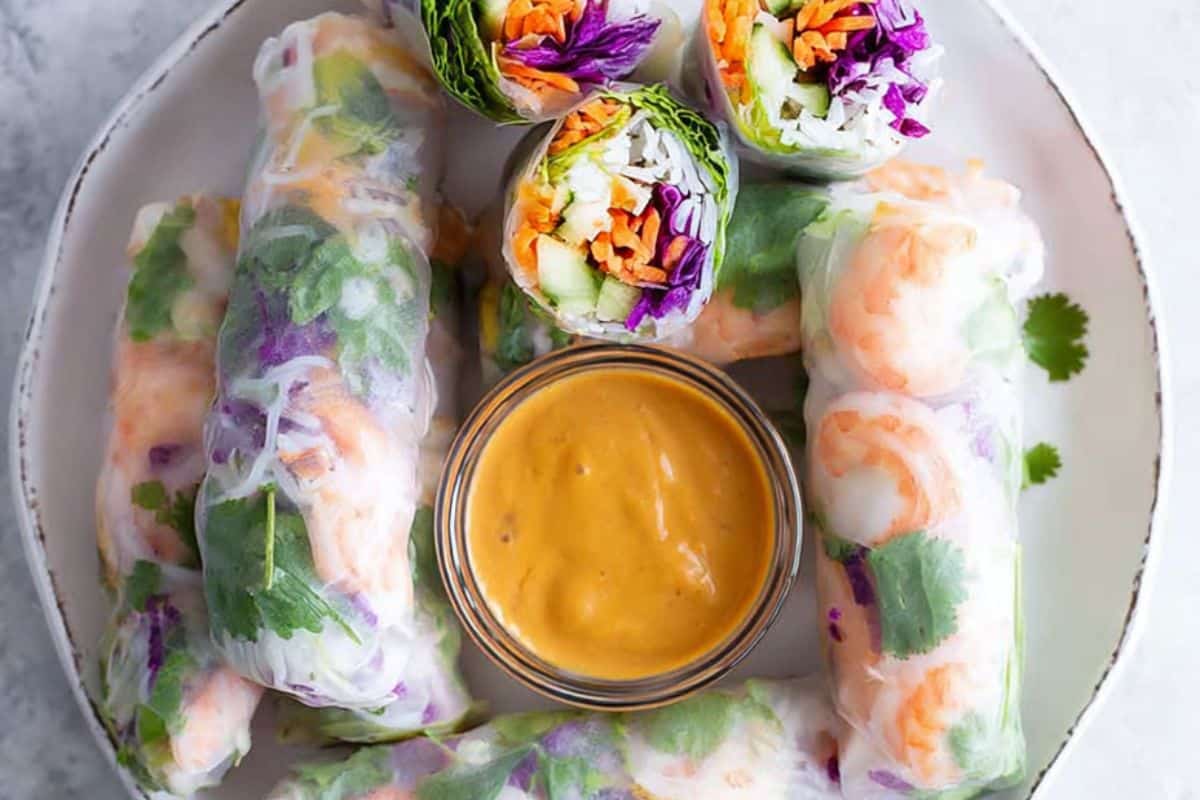
Fresh, Light, and Easy Vietnamese Spring Rolls
Ingredients
Method
- Bring a pot of water to a boil and add a lot of salt. It should taste as salty as the sea.
- Add shrimp to the salty water remove the pot from heat and poach the shrimp for 4 minutes ( with the heat off ).
- Transfer the shrimp to a paper towel lined plate to drain then move to the fridge to cool.
- Bring a second pot of water to a boil. Turn off the heat, add your vermicelli noodles to soak for 3 to 4 minutes.
- Rinse them under cold water, drain well, and set aside.
- With a kitchen scissor, roughly cut your vermicelli a few times to prevent clumping then transfer to paper towel to dry a bit.
- To a bowl add your 10g salt, 20g sugar, and 20g rice vinegar. Then add in your shredded carrots . Toss to ensure all ingredients are well combined, marinate for 5-10min.
- As shrimps have now cooled, halve the shrimp lengthwise.
- Julienne your carrots and cucumber.
- Wash and dry your herbs. Pat them completely dry; excess moisture makes the wrappers soggy.
- Separate your lettuce leaves.
- Everything should be laid out and ready to grab before you wet your first wrapper. Once the rice paper hits the water, the timer starts.
- Arrange everything in the order you will use it. I place my protein closest to me, herbs in the middle, and noodles and vegetables at the back.
- Submerge your rice paper in a bowl of room temperature water. Hold it there for 8 to 10 seconds, rotating it gently so every part gets wet.
- Lay it flat on chopping board.
- Place your fillings in the lower third of the wrapper, leaving about 3 cm clear on each side
- Layering 2 shrimp, a few pieces of cucumber, bell pepper, a pinch of cabbage, pinch of carrots, pinch of soaked noodles, herbs, & a piece or two of lettuce.
- Fold the bottom of the wrapper up and over the filling, tucking it firmly underneath.
- – Fold both sides in toward the center like the first fold of a burrito.
- Roll away from you, maintaining firm and even pressure throughout.
- Stop when you reach the end of the wrapper. It will seal itself no water or egg wash needed.
- Wrap the rolls in a second skin to ensure nothing tears or breaks
- Repeat until the filling is done
- In a bowl combine, hoisin, peanut butter, grated garlic, grated ginger, rice vinegar , sesame oil, and water .
- Whisk to combine
- Serve and enjoy !!
Check out this other asian recipes
- Crispy Fried Spring Rolls Better Than Takeout. These fried spring rolls are crunchy and golden outside . The filling inside is savory and well-seasoned.
- Easy One Pan Egg Roll in a Bowl. Savory pork, garlicky cabbage, and glossy soy-sesame sauce, all cooked together in one pan.
- How To Make Chicken Fried Rice. This recipe is perfect for all, whether you’re cooking for the first time or you’ve been trying to perfect for years.
- How To Make Teriyaki Chicken. This teriyaki chicken is simple as it only requires chicken, sauce, and heat.
- How To Make Butter Chicken. This Butter chicken, known in Hindi as Murgh Makhani, is perhaps the most popular Indian dish in the world. Here’s how to make it