
Crispy Fried Spring Rolls Better Than Takeout
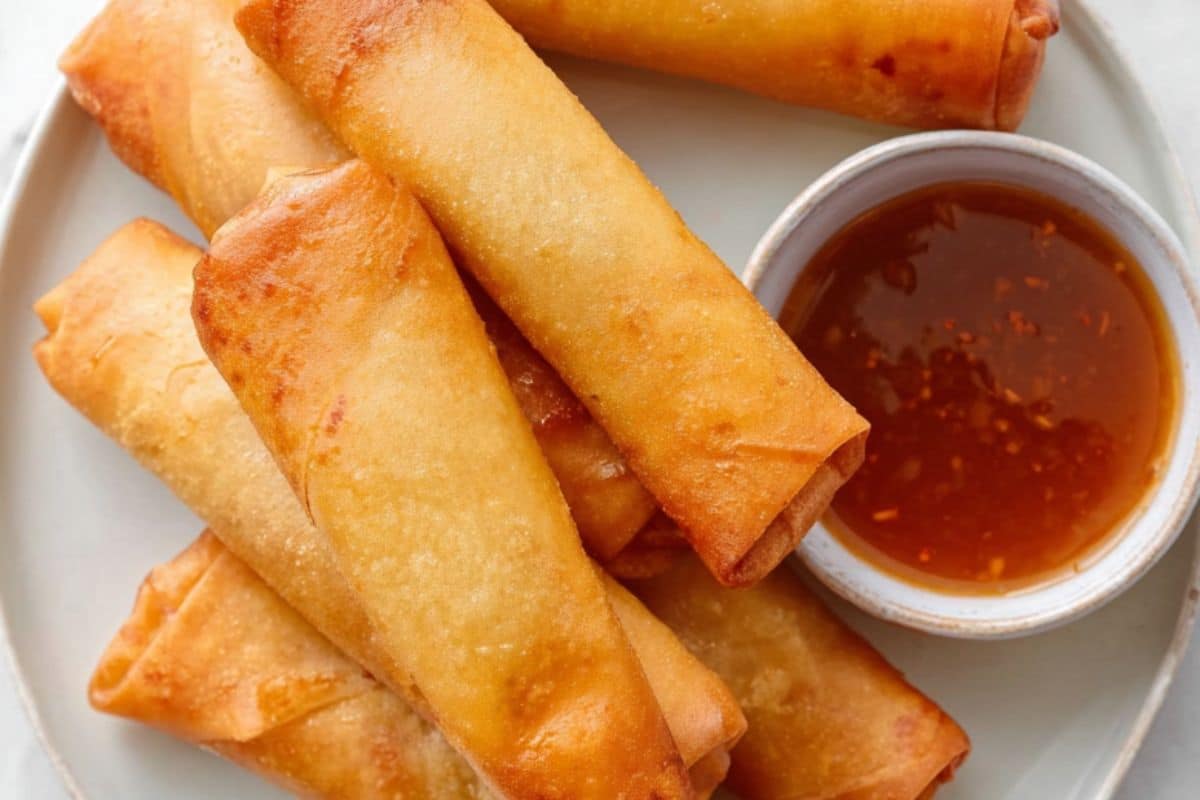
These fried spring rolls are one of my favorite recipes to make. The outside is crunchy and golden. The filling inside is savory and well-seasoned. You can find all the ingredients at any grocery store.
Many people think that deep frying at home is complicated or messy, but it really isn’t. You don’t need any special equipment. Just use a heavy pot, some oil, and a bit of confidence.
I enjoy making these when I want an appetizer that will please a crowd or when I’m looking for a fun weekend cooking project. They serve well as a party snack, a starter before dinner, or a light meal with a simple salad or soup. Once you try making them yourself, ordering them feels unnecessary.
Can’t get enough of these spring rolls? Check out these fresh spring rolls recipe.
Why You’ll Love This Recipe
- Ready in under 45 minutes. It’s quick enough for a weeknight and impressive enough for a dinner party.
- Simple, affordable ingredients include cabbage, carrots, a protein, and a pack of wrappers. Nothing fancy is required.
- Freezer-friendly. Roll them, freeze them uncooked, and fry straight from frozen whenever you need them.
- Completely customizable. You can use pork, chicken, shrimp, or tofu. The filling works with whatever you have.
- Perfect for feeding a crowd. One batch makes around 20 rolls and scales up easily.
- Easy to make vegetarian or vegan. Just swap the meat for tofu or mushrooms and skip the oyster sauce.
- Better than most takeout. With fresh oil, fresh filling, and fried to order, you can really taste the difference from the first bite.
Ingredient Notes
You don’t need anything fancy. Here’s what each ingredient does and what to use if you’re short on something.
For the filling
- Cabbage
You can use green or napa cabbage. Shred it as finely as possible. Thin shreds cook quickly and roll easily without tearing the wrapper. Sub: Savoy cabbage or a coleslaw mix in a pinch. - Carrots
Julienne the carrots thin or use a box grater. They add a slight sweetness and some crunch that balances the soft noodles. - Glass noodles or rice vermicelli
Soak them first, then chop roughly before adding. They absorb the seasoning and help keep the filling together so it doesn’t fall apart when you bite in. - Ground pork or chicken
Pork gives a richer, juicier filling. Chicken is leaner and slightly milder. Either option works well just ensure it’s cooked through and broken up finely before rolling. Sub: Chopped shrimp, crumbled tofu, or finely diced mushrooms for a vegetarian version. - Garlic and ginger
Fresh is best here. These two create the foundation of the filling’s flavor don’t skip them or reduce the amounts.
Sub: Garlic paste and ginger paste work well if that’s what you have. - Soy sauce
This adds most of the seasoning. Use light soy sauce dark soy will change the filling’s color too much and taste overpowering. - Oyster sauce
This adds a rich, slightly sweet flavor that soy sauce alone doesn’t provide. It’s what makes the filling taste like it came from a restaurant. Sub: Hoisin sauce for a sweeter flavor. Skip it entirely for vegetarian and add extra soy. - Sesame oil
Add this off the heat, right at the end. A small amount goes a long way it gives the filling that toasty, nutty aroma.
Sub: No direct substitute just leave it out if needed. - White pepper
This gives spring rolls their unique warmth. It’s different from black pepper sharper and more aromatic.
Sub: Black pepper works but gives a slightly different flavor.
For rolling and frying
- Spring roll wrappers
Use thin wheat-based spring roll wrappers NOT egg roll wrappers or rice paper. Thin wrappers fry up light and crispy. You can find them in the freezer section of any Asian grocery store, usually sold in packs of 25 or 50.
Note: Keep them covered with a damp cloth while you work they dry out and crack within minutes. - Flour and water paste
Mix one tablespoon of plain flour with two tablespoons of water to create a thick paste. This serves as your glue brush it on the final edge before sealing. Don’t skip it, or your rolls will open up in the oil.
Sub: A beaten egg works just as well for sealing. - Neutral frying oil
Any neutral vegetable, canola, or sunflower oil work well. You need enough to submerge the rolls about 2 inches deep in a heavy pot. Avoid olive oil as its smoke point is too low.
Tip: You can strain the oil and reuse it 2-3 more times for frying.
How to Make Fried Spring Rolls
Three stages: make the filling, roll them up, then fry. Here’s how to do each step.
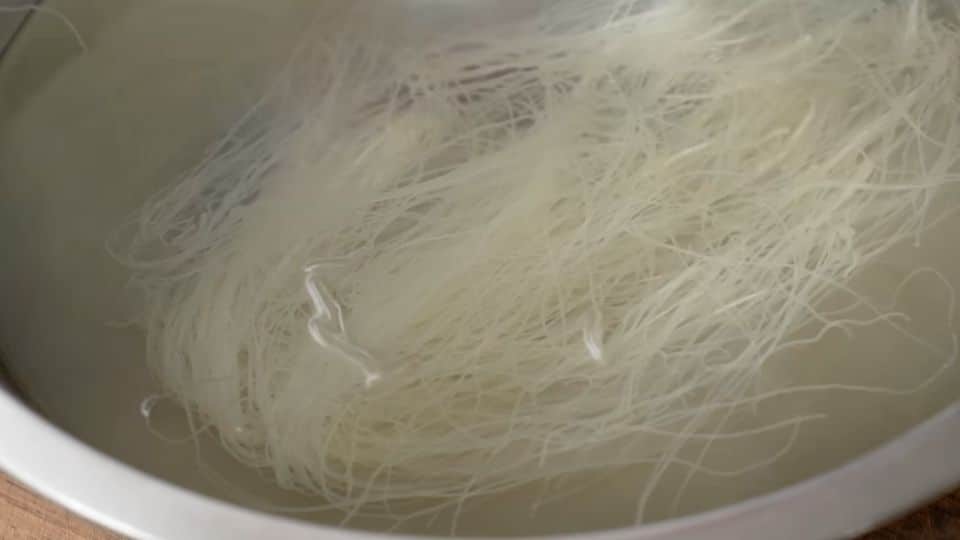
Stage 1: Prep rice vermicelli
Soak the rice vermicelli for 20 minutes. Once time is up, sieve the rice vermicelli to remove the extra water.
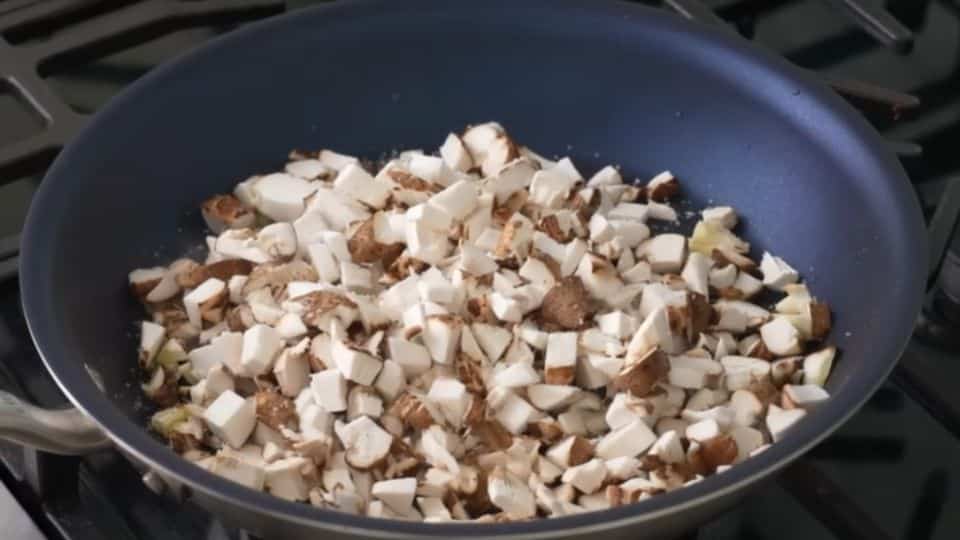
Stage 2: Make the filling
Heat a wok or large pan over medium high heat. Add a splash of oil, followed by the mushrooms & a pinch of salt. Stir to combine and sauté until the mushrooms have browned and lost their water.
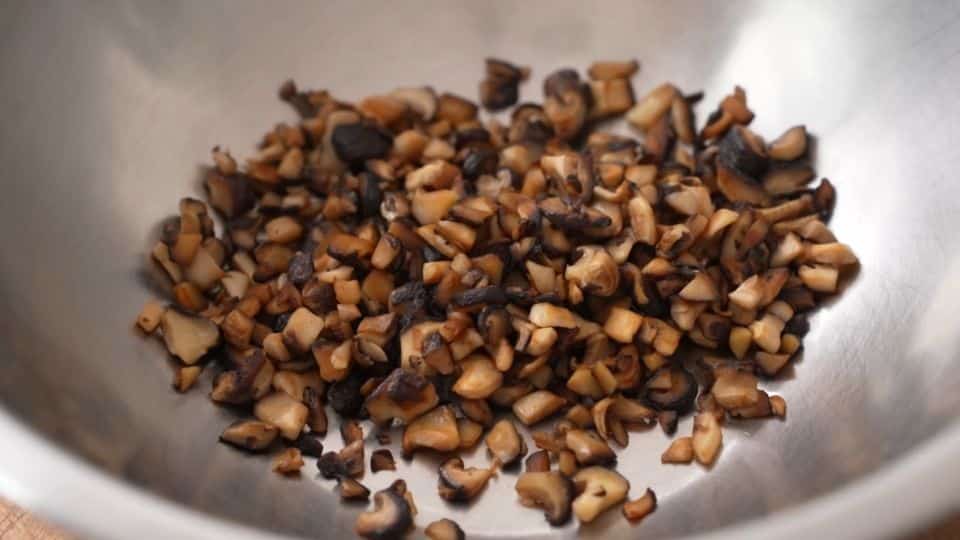
Transfer mushrooms to a bowl to cool while you prep other ingredients. Cool the filling completely. Spread it on a tray and let it cool for at least 20 minutes. Warm filling steams the wrapper from the inside during frying. That’s what causes sogginess. This step is critical.
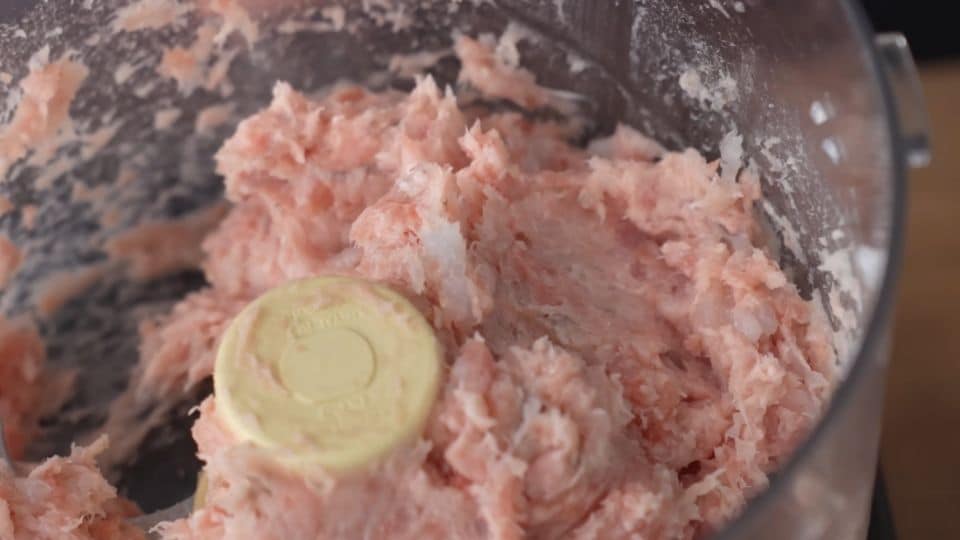
Stage 3: Your proteins
Add your shrimp and pork to a food processor and pulse until the shrimp is mostly broken down and the meat is combined. Use pulse function, we want some texture not a paste.
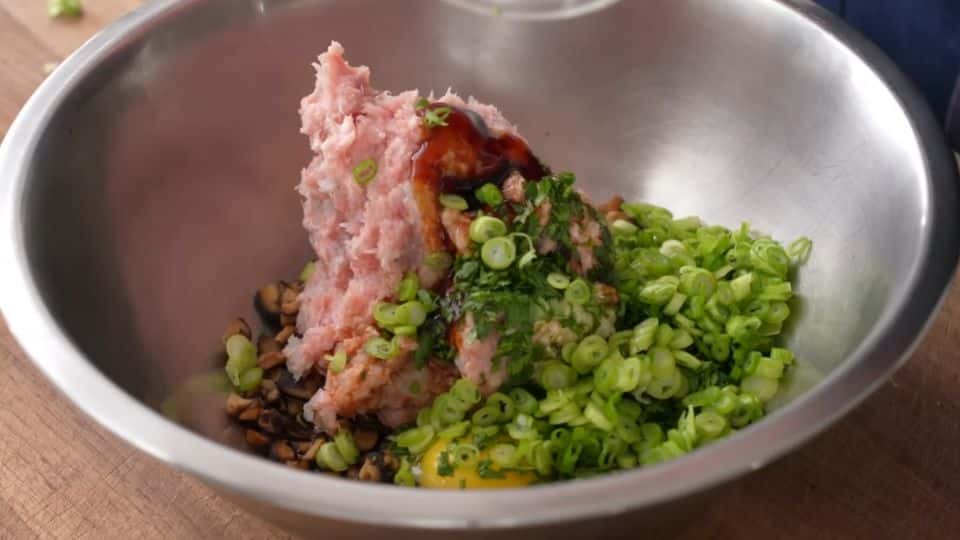
Stage 4: Combine the filling
Add the meat into a the mushrooms. To same bowl, add in your soy sauce, oyster sauce, garlic, egg, cilantro, scallions, carrots, and drained and cut rice noodles.
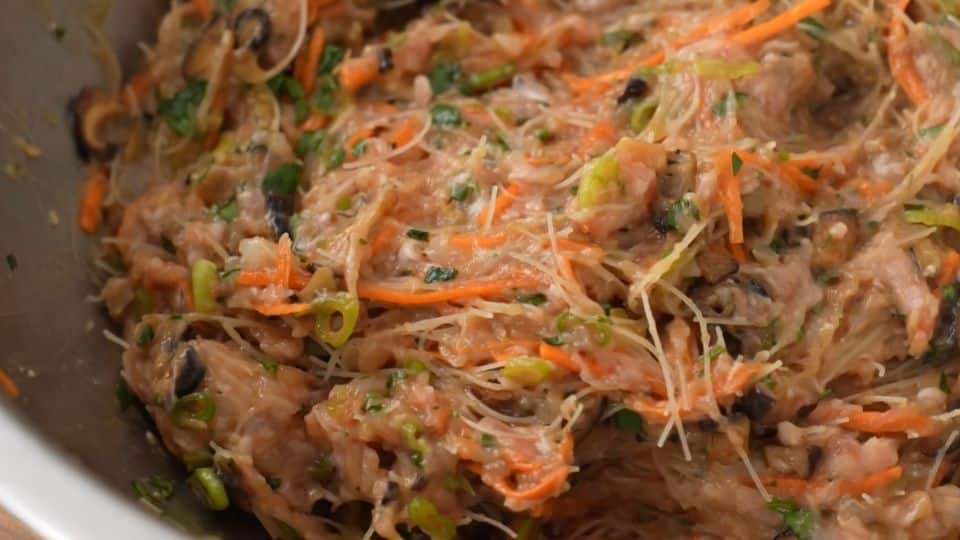
Mix to combine all ingredients are well combined. Taste and adjust the seasoning. The filling should be well-seasoned since the wrapper adds no flavor.
Stage 5: Roll them up
Set up your station. Lay out your wrappers, cooled filling, and flour paste. Keep the stack of wrappers covered with a damp cloth while you work. Place one wrapper on a clean surface in a diamond shape, one corner pointing toward you.
Add the filling. Place about 2 tablespoons of filling in a log shape across the lower third of the wrapper. Leave a 2 cm border on each side. Avoid the urge to overfill. This is the most common mistake and a main cause of burst rolls.
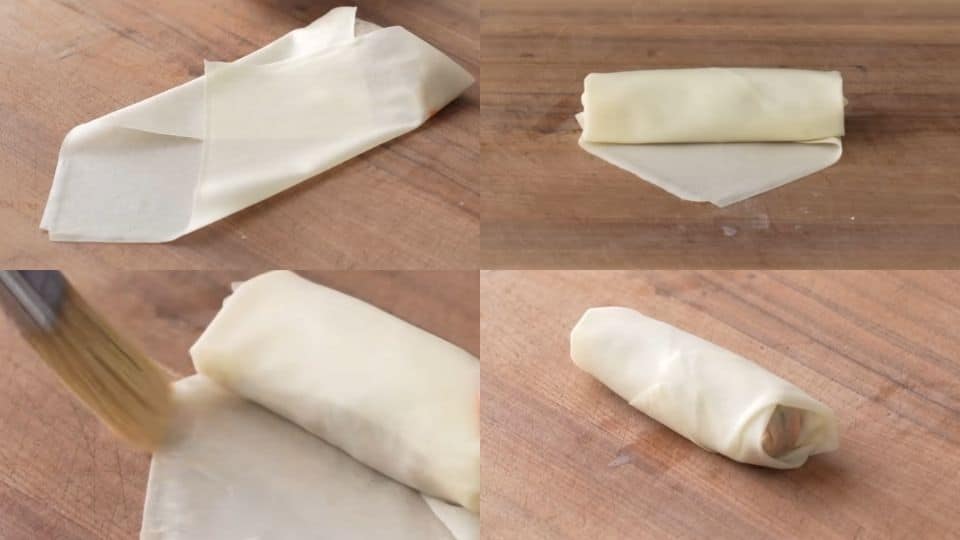
Fold, tuck, and roll. Fold the bottom corner up and over the filling snugly. Fold the left and right sides inward like an envelope. Then roll forward firmly, pressing out any air as you go. Air pockets expand in hot oil and split the wrapper open.
Seal the edge firmly.
Brush the final flap with your flour paste and press it down firmly for a few seconds. Place the roll seam-side down on a tray while you finish the rest.
Stage 6: Fry
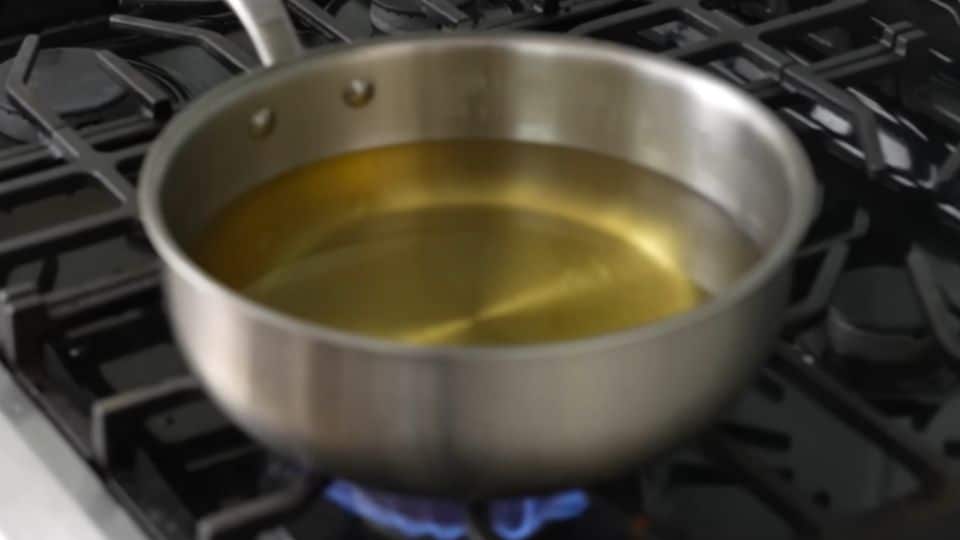
Heat the oil. Pour oil into a heavy-bottomed pot to about 2 inches deep. Heat to 175 to 180°C (350°F). No thermometer? Drop a small piece of wrapper in. If it sizzles immediately and floats to the surface, you’re ready.
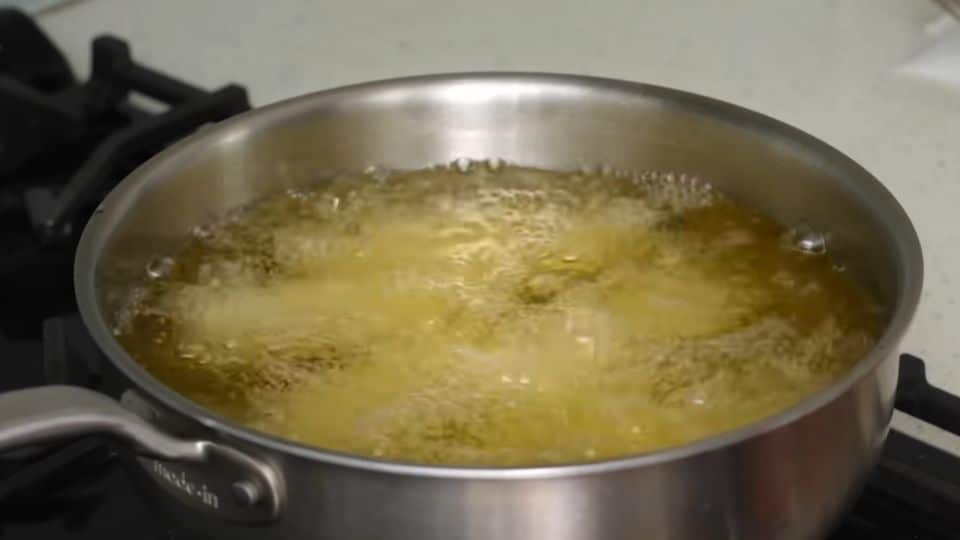
Fry in small batches. Gently lower 4 to 5 rolls in, seam-side down first. Fry for 3 to 4 minutes, turning occasionally, until deep golden all over. Don’t crowd the pot. Too many rolls drop the oil temperature and make them greasy instead of crispy.
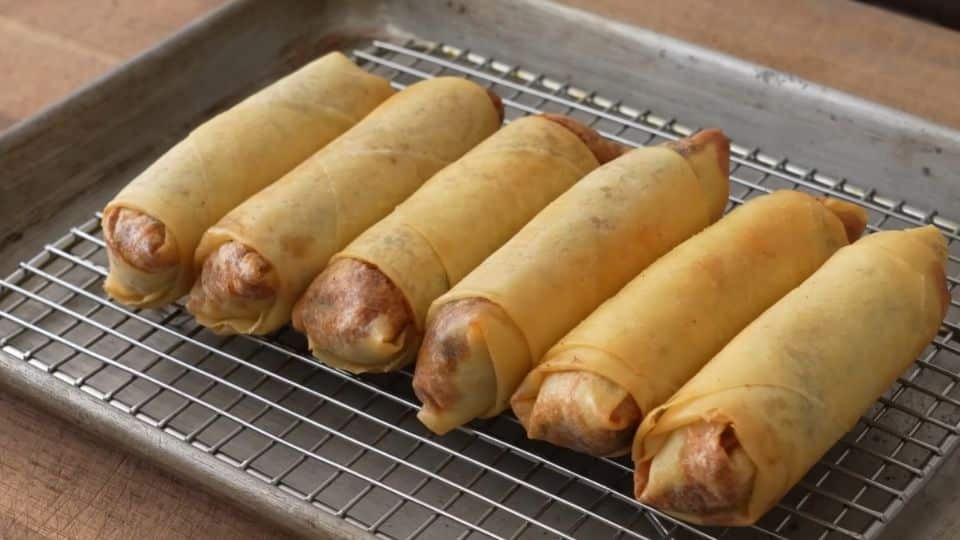
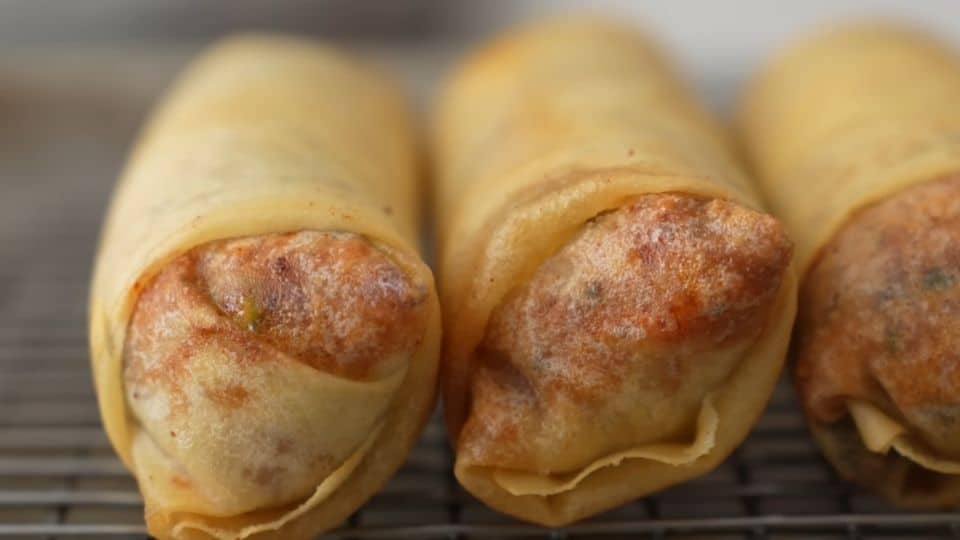
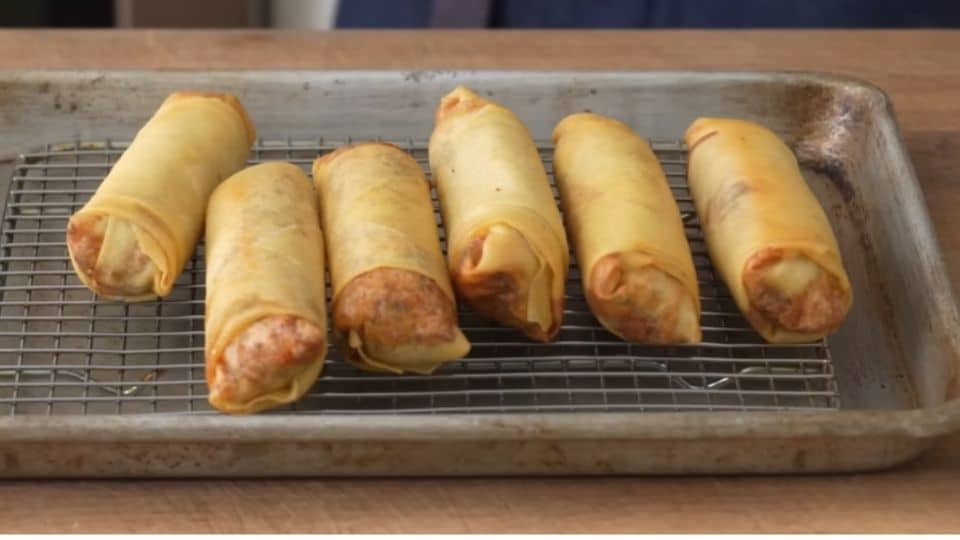
Lift the spring rolls out with a slotted spoon and rest on a wire rack, not paper towels. Paper towels trap steam underneath and soften the crust within minutes.
Serve as they have for maximum crispiness.
Recipe Success Tips
These are the things that make the difference between good spring rolls and great ones.
- Always cool your filling completely. Warm filling creates steam inside the wrapper during frying. Spread it on a wide tray and let it cool for 20 minutes.
- Squeeze out every drop of moisture. Cabbage and carrots release a lot of water as they cook. Before rolling, press the cooled filling through a fine sieve or squeeze it in a clean kitchen towel. Wet filling is the main cause of soggy spring rolls, no matter how hot your oil is.
- Don’t overfill; two tablespoons is enough. Overfilled rolls are harder to seal, more likely to burst in the oil, and often end up with an undercooked center. A tighter, neater roll fries more evenly and holds together much better.
- Roll tight and press out all air pockets. Any air trapped inside the roll expands rapidly in hot oil and pushes the wrapper apart. As you roll, use your fingers to press the filling in firmly and keep the roll snug. Think of it like wrapping a gift neat edges, no gaps.
- Get the oil temperature right before you start. Oil that’s too cold makes greasy rolls. Oil that’s too hot burns the wrapper before the filling heats through. Aim for 175–180°C.
- Fry in small batches; no more than five at a time. Adding too many rolls at once drops the oil temperature dramatically. Be patient, fry in batches, and let the oil come back up to temperature between each one.
- Rest on a wire rack, never paper towels. Paper towels trap the steam released by the hot roll underneath, which immediately softens the base. A wire rack allows air to circulate all around and keeps the crust crisp from every angle.
- First time making these? Do a test roll with your first wrapper before committing to the whole batch. It takes 30 seconds and tells you immediately if your filling is too wet, too loose, or too full. Adjust before rolling all twenty.
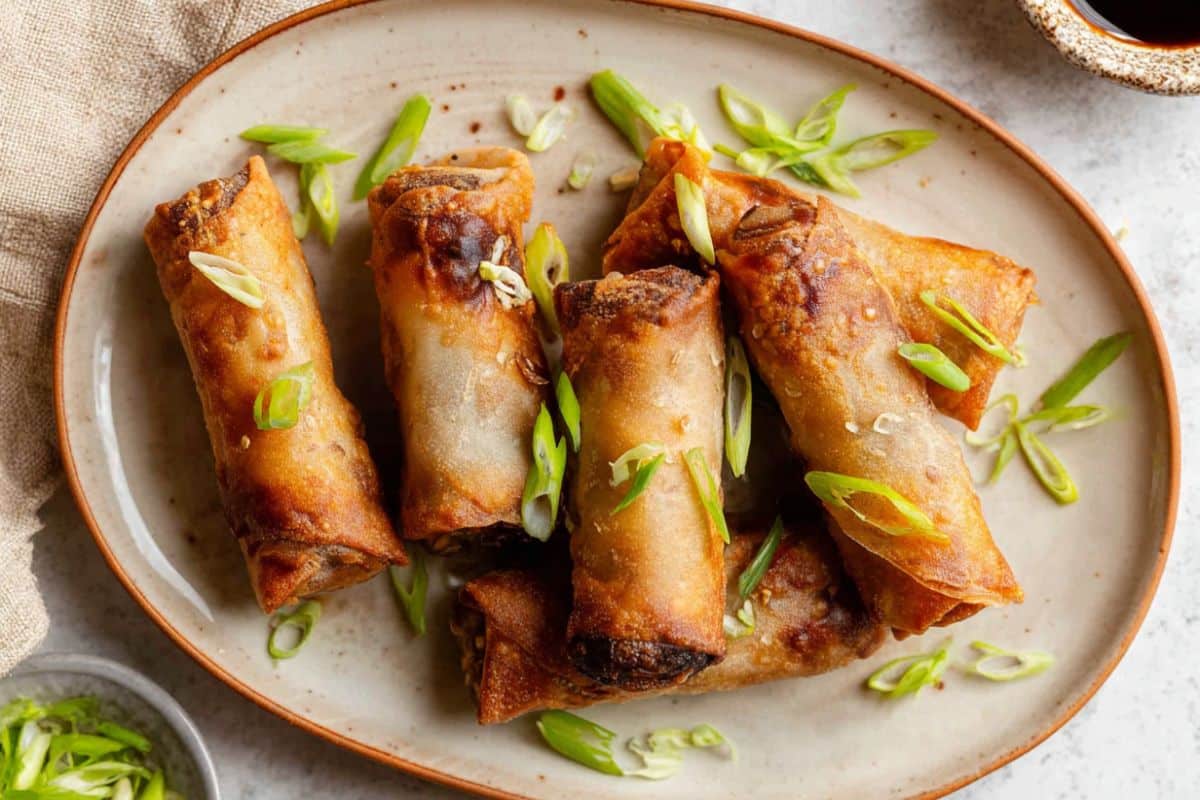
Variations and Ingredient Swaps
The base recipe is flexible. Here are the best ways to make it your own and what changes when you do.
- Vegetarian or vegan
Replace the meat with crumbled firm tofu or finely diced shiitake mushrooms. Use soy sauce instead of oyster sauce. Mushrooms add a deep, savory flavor that makes you forget there’s no meat. - Shrimp spring rolls
Use roughly chopped raw shrimp instead of pork or chicken. Cook them quickly in the wok; they only need about 2 minutes. Chop them small so they distribute evenly through the filling. - Spicy version
Stir in a teaspoon of chili flakes or finely chopped fresh chili when you add the garlic and ginger. You can also add a small spoonful of chili oil to the finished filling just before rolling. - Extra crunchy double-wrap
Wrap each roll in a second wrapper before frying. The outer layer crisps up into a thicker, sturdier shell that stays crunchy longer; this is great if you’re serving a crowd and can’t fry to order. - Air fryer version
Brush the rolls lightly with oil and air fry at 200°C for 10–12 minutes, flipping halfway through. It’s not quite the same shatter as deep frying, but it’s a solid weeknight option with far less oil. - Baked version
Brush generously with oil and bake on a wire rack at 220°C for 18–20 minutes, flipping once halfway. The rack is important because it lets the underside crisp rather than steam against a flat tray. - Vietnamese-style with rice paper
Use rice paper wrappers instead of wheat wrappers. Briefly soften each sheet in warm water before rolling. The finished roll fries up with a bumpy, lacy texture instead of a smooth shell. - Cream cheese filling
Mix softened cream cheese with crab meat or finely chopped shrimp, a little garlic, and spring onion. Roll and fry as normal. Think of it as a crispy, handheld crab rangoon.
What to Serve With It
- Dipping sauces
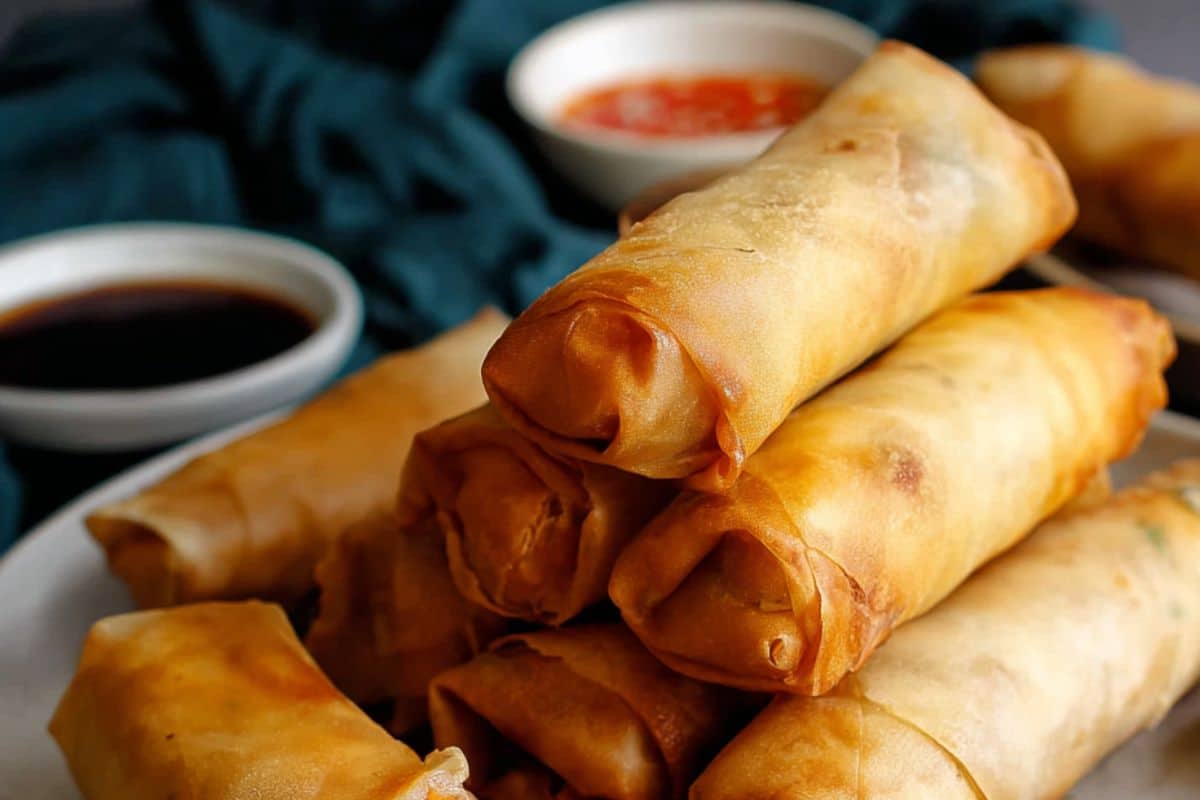
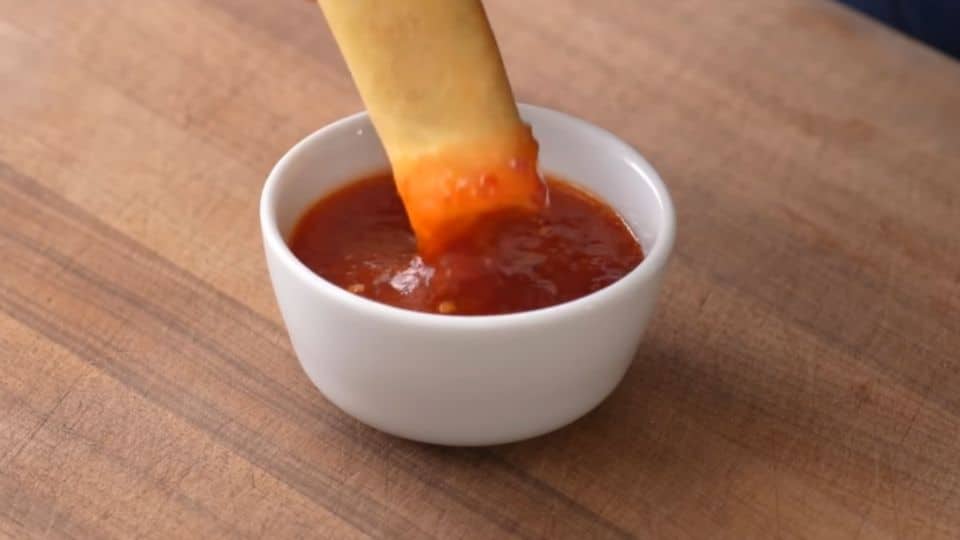
The sauce matters as much as the roll. Always offer at least two options, as people have strong preferences.- Sweet chili sauce
This is the classic pairing. It’s sweet, sticky, and mildly spicy; it cuts through the richness of the fried wrapper. - Soy, ginger, and sesame
Mix light soy sauce with a little fresh ginger, a few drops of sesame oil, and a splash of rice vinegar. It’s sharp and savory, great if you want something less sweet. - Hoisin peanut sauce
Combine hoisin sauce, peanut butter, a squeeze of lime, and a splash of warm water to loosen it. It’s rich and nutty, and it works especially well with vegetarian rolls. - Vietnamese nuoc cham
This sauce is bright, punchy, and light; it lifts every bite rather than weighing it down.
- Sweet chili sauce
- As part of a meal
- Fried rice or egg fried rice makes the most natural pairing. Both dishes share the same flavor base, so they feel like they belong together.
- Noodle soup or pho works well too; serve spring rolls on the side of a light broth-based soup. The crispy roll alongside something warm and soupy is a combination that works every time.
- Asian cucumber salad features thinly sliced cucumber dressed with rice vinegar, sesame oil, a pinch of sugar, and chili flakes. It’s cool and acidic; it cuts through the richness and refreshes the palate.
- A dim sum spread pairs nicely with steamed dumplings, sticky rice, and char siu bao. They add the fried element that every good dim sum selection needs.
Storage and Make-Ahead Instructions
This is one of the best recipes to prepare in advance. The uncooked rolls freeze well and can be fried straight from frozen with minimal difference in result.
- Cooked rolls – fridge
Let the rolls cool completely before storing. Place them in an airtight container lined with a paper towel to soak up any excess moisture. They stay fresh for up to 3 days in the fridge.
To reheat, use an oven or air fryer at 180°C for 8 to 10 minutes. Avoid the microwave, as it softens the wrapper and makes it chewy without a way to fix it. - Uncooked rolls – freezer (recommended)
This is the best way to prepare in advance. Arrange rolled, uncooked spring rolls in a single layer on a lined tray and freeze for 2 hours until solid. Then, transfer them to a zip-lock bag and store for up to 3 months.
To cook, fry them straight from frozen at 170°C, which is slightly lower than usual. Add 2 extra minutes. Do not thaw first; thawing makes the wrapper wet and fragile. - Cooked rolls – freezer
This is possible, but the texture isn’t as good compared to freezing uncooked rolls. Let them cool completely, freeze on a tray first, then bag them. Store for up to 2 months.
To reheat, use an air fryer at 190°C for 10 to 12 minutes from frozen. Use a wire rack in the oven to ensure the base crisps up properly.
Frequently Asked Questions
The questions that come up most often, answered honestly and practically.
- Why did my spring rolls burst open during frying?
Almost always one of three things causes this: air pockets trapped inside the roll, a poorly sealed seam, or overfilling. Roll firmly to press out any air as you go. Use enough flour paste on the final flap, and press the seam down for a few seconds before setting it aside. If rolls keep bursting, try reducing the filling by half a tablespoon. - Why are my spring rolls greasy instead of crispy?
The oil wasn’t hot enough. When the temperature drops below 165°C, the wrapper absorbs oil instead of getting crispy. This usually happens when you add too many rolls at once. Fry in smaller batches of four or five at most and give the oil a minute to recover between each batch. - What’s the difference between spring roll wrappers and egg roll wrappers?
Spring roll wrappers are thin, delicate wheat sheets that fry up light and crispy. Egg roll wrappers are thicker, chewier, and contain egg; they fry up with a blistered, doughy shell instead of a crisp one. For this recipe, you want spring roll wrappers. Find them in the freezer section of any Asian grocery store. - How do I keep spring rolls crispy if I’m serving a crowd?
Place fried rolls on a wire rack set over a baking tray in an oven at 120°C. This keeps them hot and lets air circulate around them, so the crust stays crisp for up to 30 minutes. Never stack them or cover them; that traps steam and softens everything quickly. - Can I bake these instead of frying?
Yes, brush generously with oil and bake on a wire rack at 220°C for 18 to 20 minutes, flipping once halfway through. They won’t have the same crispiness as deep-fried rolls, but they come out golden and satisfying. The wire rack is important; baking flat on a tray makes the underside soft and pale.
Crispy Fried Spring Rolls Better Than Takeout
Ingredients
Method
- Cover the rice vermicelli with water to soak for 20 minutes.
- Heat a wok or large pan over medium high heat. Add a splash of oil, followed by mushrooms & a pinch of salt.
- Stir to combine and sauté until the mushrooms have browned and lost their water
- Transfer mushrooms to a bowl to cool while you prep other ingredients.
- Add your shrimp and pork to a food processor and pulse until shrimp is mostly broken down and the meats are combined. Use pulse function, we want some texture not a paste.
- Add the meat into a the mushrooms
- To same bowl, add in your soy sauce, oyster sauce, garlic, egg, cilantro, scallions, carrots, and drained and cut rice noodles. Mix to combine all ingredients are well combined. Set aside
- Heat a medium-large sauce pan over medium-high heat and add in about any high smoke point neutral oil. The oil level should be no more than halfway up your pot.
- Lay down a piece of spring roll pastry in a diamond shape with the corner pointing towards your body and add about 75g of the meat filling near the bottom corner. About 2 tablespoons of filling
- Place about 2 tablespoons of filling in a log shape across the lower third of the wrapper. Leave a 2 cm border on each side.
- Fold, tuck, and roll. Fold the bottom corner up and over the filling snugly. Fold the left and right sides inward like an envelope. Then roll forward firmly, pressing out any air as you go.
- Seal the edge firmly. Brush the final flap with your flour paste or cornstarch slurry and press it down firmly for a few seconds.
- Place the roll seam-side down on a tray while you finish the rest.
- Pour oil into a heavy-bottomed pot to about 2 inches deep. Heat to 175 to 180°C (350°F). No thermometer? Drop a small piece of wrapper in. If it sizzles immediately and floats to the surface, you’re ready.
- Drop 4 to 5 spring rolls in, seam-side down first into the hot oil always away from you. Work in batches so that oil maintains it's temperature.
- Fry for 5-6 minutes until golden brown and crisp, flipping over after about a minute.
- Repeat until all spring rolls are done
- Remove and allow to cool on a rack for about 10-minutes.
- Serve and enjoy with your favorite dipping sauce
Check out this other asian recipes
- Fresh, Light, and Easy Vietnamese Spring Rolls. These Vietnamese spring rolls are light, cool, and full of flavor.
- Easy One Pan Egg Roll in a Bowl. Savory pork, garlicky cabbage, and glossy soy-sesame sauce, all cooked together in one pan.
- How To Make Chicken Fried Rice. This recipe is perfect for all, whether you’re cooking for the first time or you’ve been trying to perfect for years.
- How To Make Teriyaki Chicken. This teriyaki chicken is simple as it only requires chicken, sauce, and heat.
- How To Make Butter Chicken. This Butter chicken, known in Hindi as Murgh Makhani, is perhaps the most popular Indian dish in the world. Here’s how to make it
One Comment
Comments are closed.